
Palm Bay, Florida
Tile Roof Repair in Palm Bay, FL
Broken, cracked and displaced concrete or clay tile, plus the underlayment and flashing work that tile leaks usually trace back to.
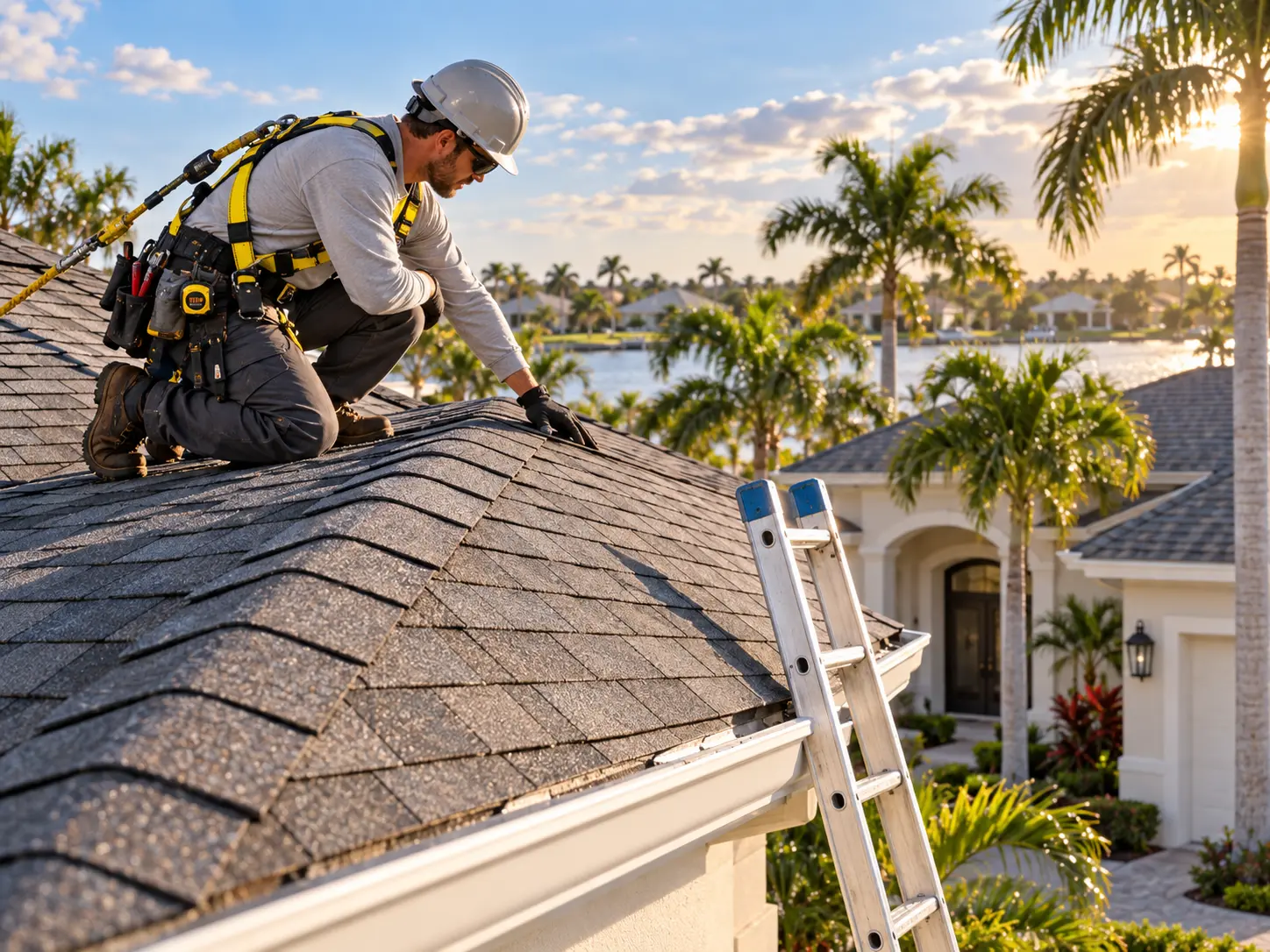
Tile roofs work differently from every other residential system, and understanding that difference explains most tile repairs. The tile itself is primarily a protective and decorative shell. The actual waterproofing is the underlayment beneath it. Water regularly gets past tile during heavy rain — it is supposed to — and the underlayment carries it back down to the eave.
That means two distinct categories of tile work. Broken or slipped tiles are a covering problem: they expose the underlayment to sun and mechanical damage and need to be corrected. Leaks, on the other hand, almost always mean the underlayment or flashing beneath the tile has failed, and fixing them requires lifting tile to reach the real issue.
What you may notice
Signs of this problem on a Palm Bay roof
Cracked or broken tiles
Visible splits, chips or missing corners, often caused by impact or by someone walking the roof incorrectly.
Slipped or displaced tiles
Tiles that have shifted out of alignment leave gaps and expose the courses below to wind and water.
Tile debris in gutters or on the ground
Fragments of concrete or clay collecting at the eave indicate tiles are breaking somewhere above.
Interior leaks with no obvious broken tile
The classic sign of underlayment failure, which is invisible from the ground and from the tile surface.
Sagging or uneven tile lines
A dip in an otherwise straight course can indicate decking or batten problems underneath.
Mortar loss at hips and ridges
Deteriorated mortar bedding at the ridge line allows ridge tiles to loosen and lets wind-driven rain in.
Why it happens
Common causes
Impact damage
Falling limbs, wind-borne debris and dropped objects crack tile readily, particularly older, more brittle concrete.
Foot traffic
Tile must be walked at specific points. Careless traffic from other trades — satellite installers, pressure washers, painters — is a very common cause of cracks.
Underlayment aging
The felt or synthetic membrane under the tile is the waterproofing layer, and it ages on a shorter timeline than the tile above it.
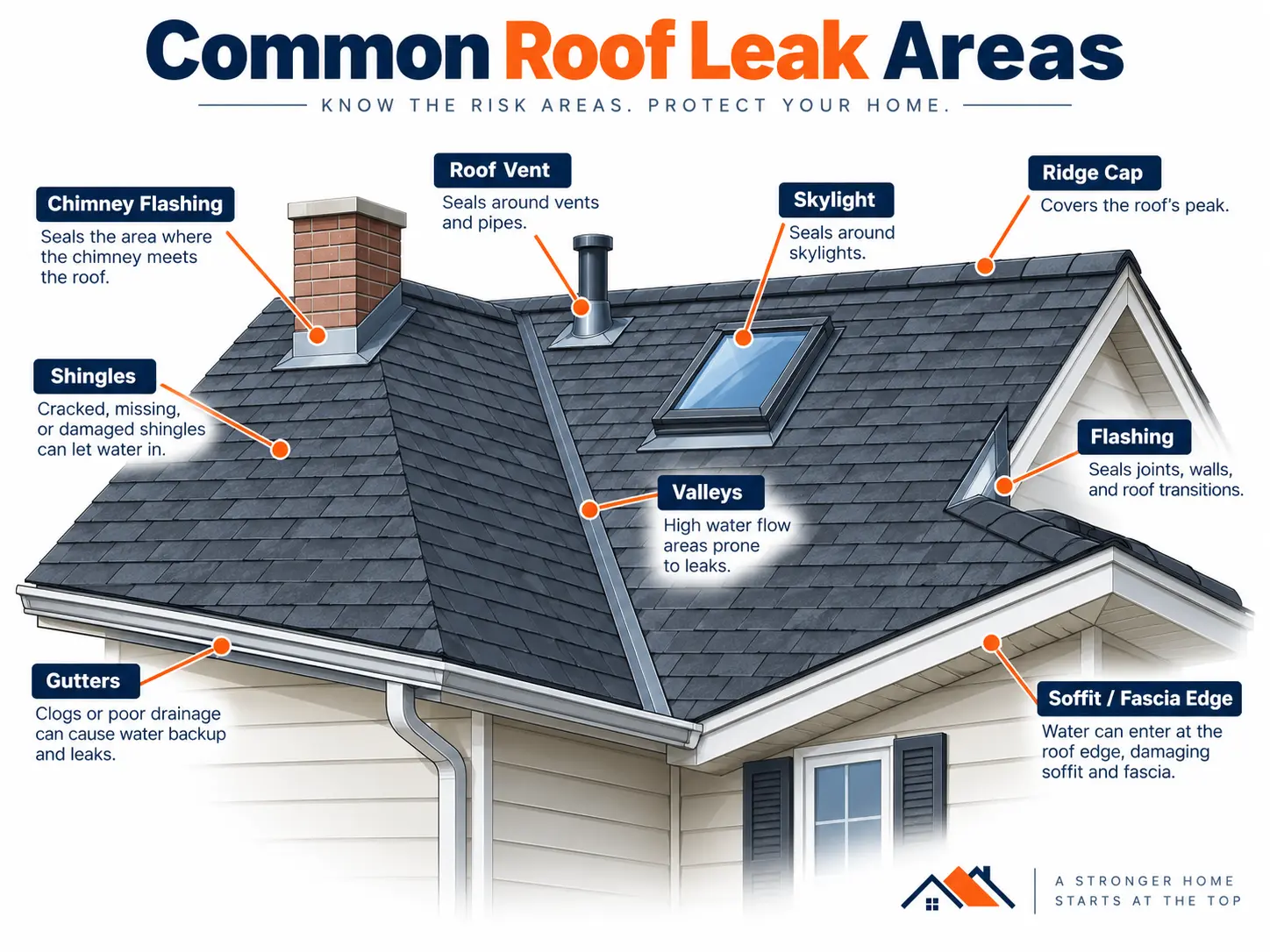
Flashing failure at valleys and walls
Tile valleys and roof-to-wall transitions collect concentrated runoff and are frequent leak origins.
Wind uplift at edges and ridges
Perimeter tiles and ridge caps take the strongest uplift forces and can loosen even when the field remains intact.
How the repair is approached
Individual broken tiles are replaced by lifting the surrounding courses, removing the fragments and setting a matching tile with the correct fastening or adhesive for the profile and location on the roof.
Where a leak is involved, the tile in the affected area is carefully removed and stacked, the underlayment is examined, and the failed section is replaced with new membrane properly lapped into the surrounding material before the tile goes back.
Valleys and wall transitions are treated as their own assemblies. Metal valley pans, closures and counter flashing are inspected for corrosion, displacement and correct overlap rather than just resealed.
Hip and ridge work involves resetting or rebedding tiles and, where appropriate, using modern ridge attachment methods rather than relying solely on old mortar that has already failed once.
What matters specifically in Palm Bay
Tile is well suited to Florida for wind and longevity reasons, but the underlayment beneath it is on a clock. Many tile roofs across Palm Bay are at a stage where the tile is fine and the membrane below is not, which is why a leak on a tile roof rarely means the tile has failed.
Heavy summer downpours push a large volume of water through the tile system in a short time. Any weakness in valley detailing or underlayment laps shows up under that load.
Vegetation is another local factor. Debris that accumulates in tile valleys and behind ridge lines holds moisture against the underlayment and can dam water during a storm, so keeping those channels clear is genuinely preventative.
Repair or replacement?
Tile repair is appropriate when a limited number of tiles are damaged, or when underlayment failure is confined to one area and the rest of the membrane still has usable service life.
The bigger decision on tile roofs is usually not tile replacement but underlayment renewal — lifting and re-setting tile over a new membrane. That becomes worth considering when leaks are appearing in multiple separate areas, which generally indicates the membrane has reached the end of its life across the roof.
Matching profiles matters. Older concrete and clay profiles are frequently discontinued, so salvaged tile is sometimes the only route to a visually consistent repair.
What affects the cost
Roof repair pricing depends on inspection findings. These are the variables that move it most.
Tile availability and matching
Discontinued profiles and colors may require sourcing salvaged tile, which affects both time and price.
Whether underlayment is involved
Replacing a few tiles is straightforward; lifting an area to renew membrane is substantially more work.
Roof pitch and access
Steep tile roofs require more careful staging and slower work to avoid creating new breakage.
Location of the repair
Valleys, ridges and wall transitions take longer per square foot than the open field.
Breakage during the work
Some incidental tile breakage is normal when lifting an area, and extra matching tile is typically factored in.
Step by step
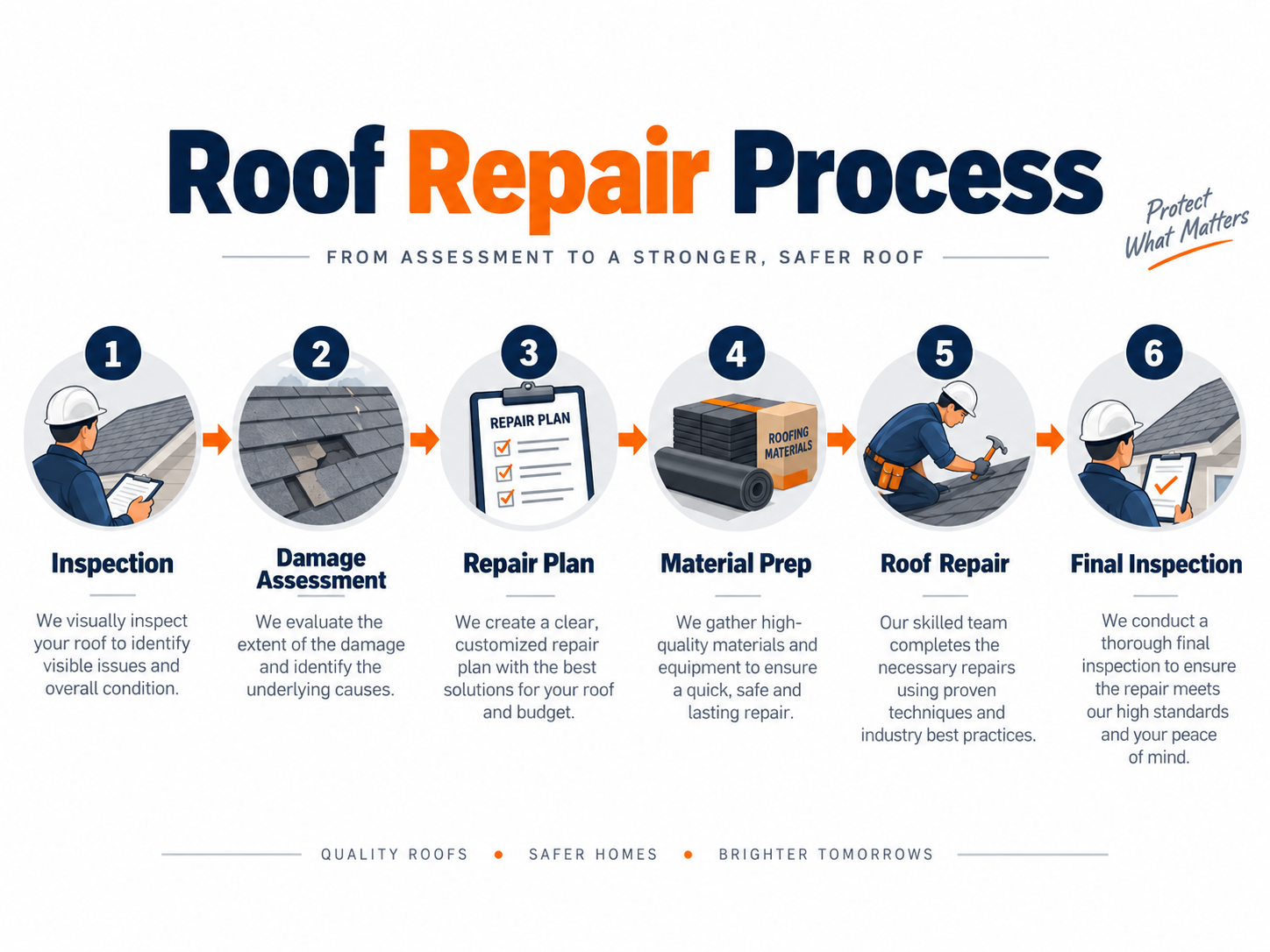
- 1Inspection of tile condition, underlayment evidence and flashing
- 2Careful removal and stacking of tile in the work area
- 3Assessment of underlayment, battens and decking
- 4Membrane or flashing repair as required
- 5Re-setting tile with correct fastening and replacement of broken pieces
- 6Clearing of valleys and final review of water paths
Tile Roof Repair questions Palm Bay homeowners ask
My tile roof is leaking but no tiles look broken. How is that possible?
That is actually the normal pattern on tile roofs. Tile is a water-shedding shell, not a waterproof membrane — wind-driven rain routinely gets past it, and the underlayment underneath is what carries that water back to the eave. When the underlayment ages, cracks or tears, water that the system was always handling suddenly has a path into the structure. From above, the roof looks perfect. Diagnosis requires lifting tile in the suspected area to see the condition of the membrane below.
Can I walk on my tile roof to check something?
It is strongly discouraged. Tile carries weight only at specific points — generally the lower third of the tile where it is supported by the course beneath — and stepping elsewhere cracks it. Cracks are not always obvious immediately; a hairline fracture can go unnoticed for months and then let water into the underlayment. Broken tile is often caused by well-intentioned homeowners or by other trades who needed roof access and did not know the rules.
How long does tile underlayment last compared with the tile?
Concrete and clay tile can serve for many decades, while the underlayment beneath is on a much shorter timeline that varies by material type, ventilation and sun exposure. It is completely normal for a tile roof to need its membrane renewed while the tile itself remains perfectly serviceable. That is why the standard tile renewal project involves removing and re-installing the existing tile over new underlayment rather than buying all-new tile, which keeps a lot of material out of the landfill and controls cost.
Will replacement tiles match my existing roof?
Sometimes closely, sometimes only approximately. Tile profiles are manufacturer-specific and many older ones are discontinued, so the options are a current profile that matches the shape, or salvaged tile from the same era. Color is a separate issue: even identical tile weathers, so a new piece often looks brighter for a while before it blends. On repairs in a visible area, a clear explanation of what the match is likely to look like should come before ordering anything.
Are broken tiles urgent if there is no leak yet?
They should be corrected reasonably soon. A broken tile leaves the underlayment exposed to direct UV, which degrades it far faster than it would age under tile. It also creates a spot where wind can catch adjacent tiles and where debris collects. The repair itself is normally minor. The situation you want to avoid is one where a couple of broken tiles sit for a year or two and turn into a section of failed membrane that needs a much larger repair.
Related roof repair services
Palm Bay areas covered
Get a roof repair estimate for your Palm Bay home
Describe what the roof is doing and the request can be connected with local roofing service providers who handle inspections and repairs.
Roof repair requests accepted 24/7.