
Palm Bay, Florida
Roof Tarping in Palm Bay, FL
Temporary tarping that keeps water out of an open or damaged roof area until a permanent repair can be completed properly.
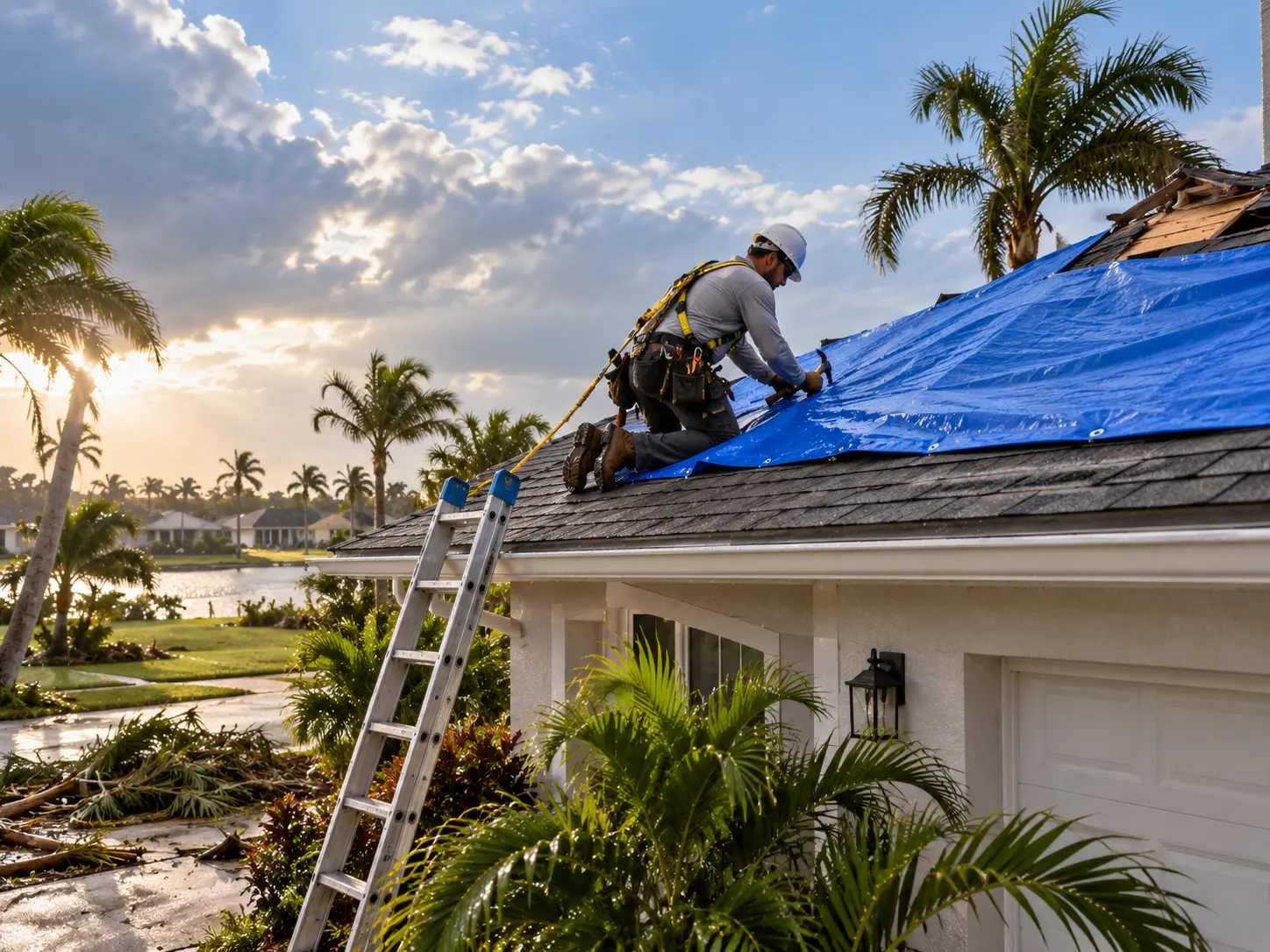
Tarping is damage control. When a roof has an open area — missing covering, a puncture, a torn-off section — the objective is to stop water entering while the permanent repair is arranged. Done well, a tarp buys weeks of protection. Done badly, it flaps loose in the first gust or channels water into the building instead of away from it.
The difference is in the installation. A tarp needs to run up and over the ridge or be terminated above the damaged area so water cannot get under its upper edge, it needs to be tensioned and secured along battens rather than simply weighted, and its fasteners need to be placed where they will not create new leaks in sound roof surface.
What you may notice
Signs of this problem on a Palm Bay roof
Visible open decking
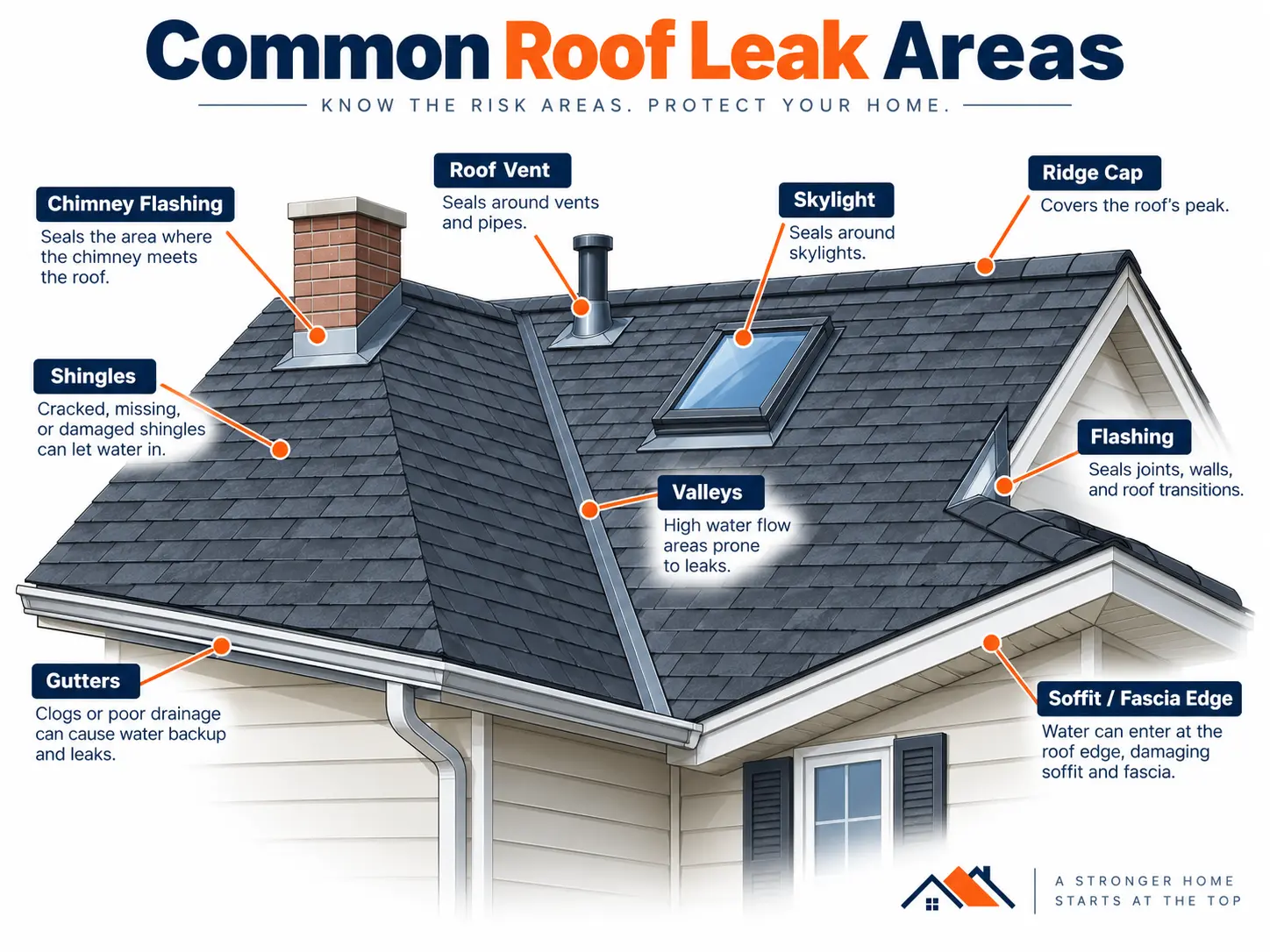
Any area where sheathing or underlayment is exposed to the sky should be covered before the next rain.
Storm-torn roof sections
Wind-peeled covering leaves large areas with no water barrier and edges that will keep peeling.
Tree or debris puncture
A puncture through the decking admits water directly into the attic and cannot wait for a scheduled repair.
Active interior water entry
Where the interior is already taking water, tarping limits how much additional damage accumulates.
Repairs delayed by materials or scheduling
After a widespread storm event, a tarp bridges the gap until crews and materials are available.
Why it happens
Common causes
Tropical systems and severe thunderstorms
The most common reason a Palm Bay roof needs emergency covering.
Falling limbs
Trees close to the roofline cause a large share of puncture damage during wind events.
Sudden failure of aged covering
A roof at the end of its life can lose a large section in a single storm.
Damage discovered mid-repair
Occasionally a repair reveals more damage than expected and the area needs protection overnight.
How the repair is approached
Safety is assessed first. A wet, steep or structurally compromised roof is dangerous, and there are conditions in which tarping has to wait for daylight or for wind to drop.
The tarp is sized to extend well beyond the damaged area in all directions, with the upper edge secured above the damage — ideally over the ridge — so water running down the roof cannot get underneath it.
Edges are wrapped around battens and fastened, which distributes load and prevents wind from working at the fabric edge. Loose weights and unsecured corners are what make tarps fail.
Fastener placement is planned so that when the tarp is removed, the penetrations fall within the area being permanently repaired wherever possible, rather than leaving new holes in sound roofing.
What matters specifically in Palm Bay
Palm Bay's rainfall pattern means an open roof rarely stays dry for long during the wet season. Same-day protection is often the difference between a roof repair and a roof repair plus ceiling, insulation and flooring work.
Sustained wind in tropical conditions puts far more stress on a tarp than ordinary weather. Installation method matters much more here than in a climate where a tarp only has to resist a light breeze.
After a major regional event, tarps sometimes have to serve longer than anyone would like because of demand. That makes proper installation and periodic checking genuinely important.
Repair or replacement?
A tarp is never the repair. It is a temporary barrier that protects the building while the actual decision about repair or replacement is made with inspection findings in hand.
If the damage is contained, the permanent solution is usually a targeted repair of the affected area once the roof is dry.
If the tarp is covering a large section of a roof that was already aged, replacement is often the more sensible path, and the tarp holds the line until that project can be scheduled.
What affects the cost
Roof repair pricing depends on inspection findings. These are the variables that move it most.
Area to be covered
A single slope section is quick; multiple planes require more material and more securing.
Roof height and pitch
Steeper and taller roofs require more fall protection and take longer to work safely.
Weather conditions at the time
Work during or immediately after a storm is slower and requires more care.
Complexity of the roof
Valleys, dormers and multiple intersections make it harder to create a continuous protected area.
Whether it is combined with permanent repair
One mobilization covering both is more efficient than two separate visits.
Step by step
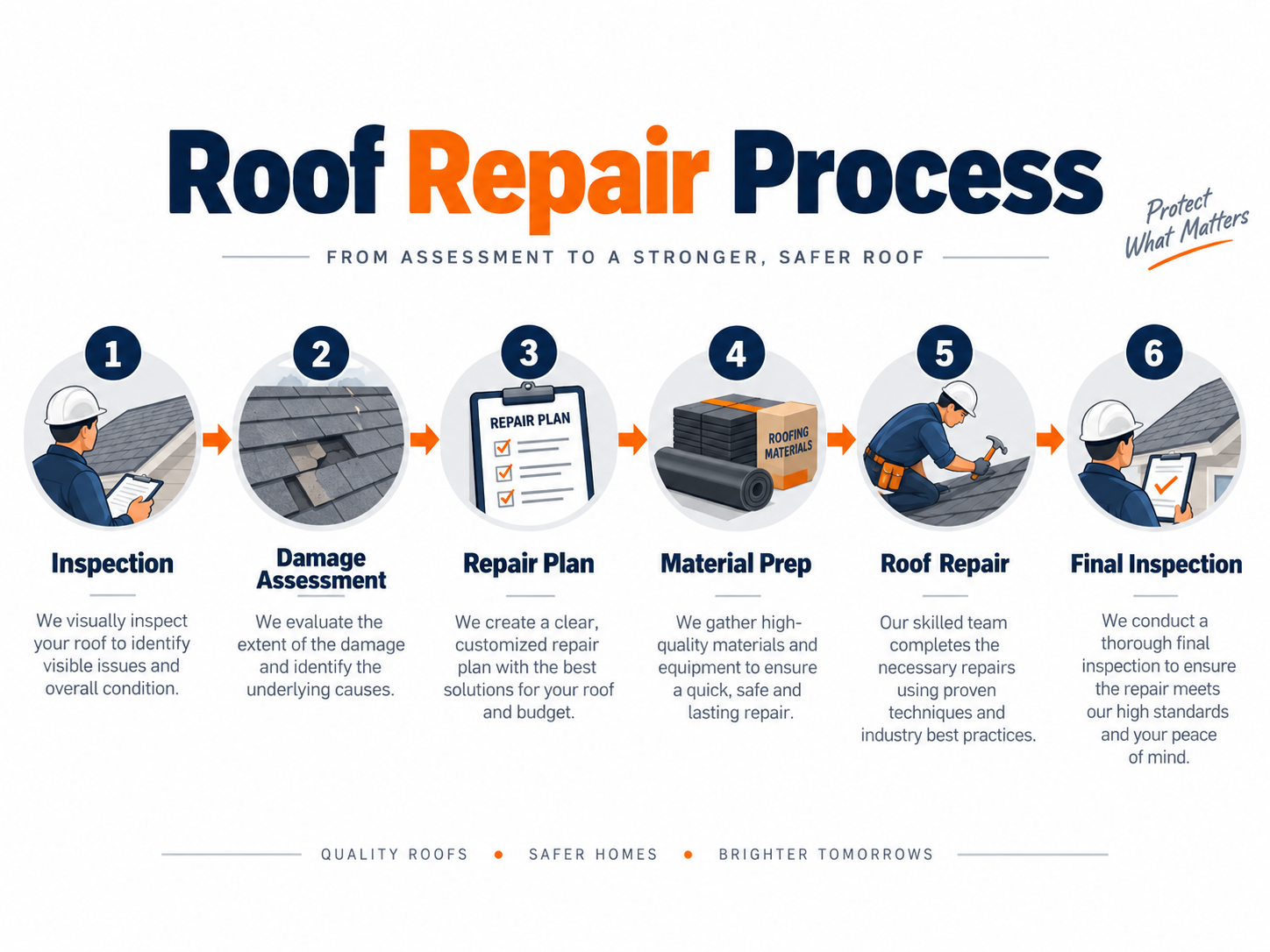
- 1Assess whether conditions allow safe roof access
- 2Determine the extent of the open or damaged area
- 3Size and position the tarp to shed water above the damage
- 4Secure edges with battens and appropriate fastening
- 5Photograph the damage and the installed protection
- 6Schedule the permanent inspection and repair
Roof Tarping questions Palm Bay homeowners ask
How long will a properly installed roof tarp last?
A well-installed tarp using quality material can reasonably protect a roof for several weeks, and sometimes longer. The limiting factors are UV exposure, which breaks down the fabric, and wind, which works at any edge that is not fully secured. Cheaper hardware-store tarps degrade noticeably faster. The right way to think about it is as a bridge to the permanent repair, with a periodic check to confirm nothing has loosened, rather than as a solution with a set expiration date.
Should I tarp my own roof after a storm?
Climbing onto a storm-damaged roof is strongly discouraged. The surface is wet, the covering may be loose in places that are not visible, and the decking underneath may have been compromised by debris or water. Falls from roofs can cause serious injury, and the additional interior damage from waiting a few hours is generally the lesser cost. It is safer to protect what is possible from inside, document the damage, and request professional roof access with proper equipment.
Will tarping damage my roof further?
A tarp installation does involve fasteners, and those fasteners go through roofing material. A careful installer plans placement so the penetrations fall in areas that will be repaired anyway, or in locations that can be properly sealed when the tarp comes off. That is a very small trade for keeping water out of the house. What causes real additional damage is a poorly secured tarp that lifts in wind, because a flapping tarp abrades the surface beneath it and can tear away more covering.
Does insurance usually cover emergency tarping?
Many homeowners policies include coverage for reasonable emergency measures taken to prevent further damage, but terms vary significantly between policies and carriers, and coverage specifics should be confirmed directly with the insurer. What generally helps is documentation: photographs of the damage before the tarp went on, a record of when the work was done, and a description of the area protected. Keeping that with claim paperwork can support the process.
Can a tarp go over a tile or metal roof?
Yes, but the method differs. On tile, fastening has to avoid breaking additional tiles and often relies on securing over ridge lines and using battens across the tile surface. On metal, fastener placement must account for panel ribs and existing seams so new leak points are not created in sound panels. Both take longer than tarping a shingle roof. Mentioning the roof type when requesting service can help ensure the right materials and approach are prepared in advance.
Get a roof repair estimate for your Palm Bay home
Describe what the roof is doing and the request can be connected with local roofing service providers who handle inspections and repairs.
Roof repair requests accepted 24/7.