
Palm Bay, Florida
Roof Flashing Repair in Palm Bay, FL
Repairing the metal transitions — step, wall, chimney, valley and drip edge — where a large share of roof leaks actually begin.
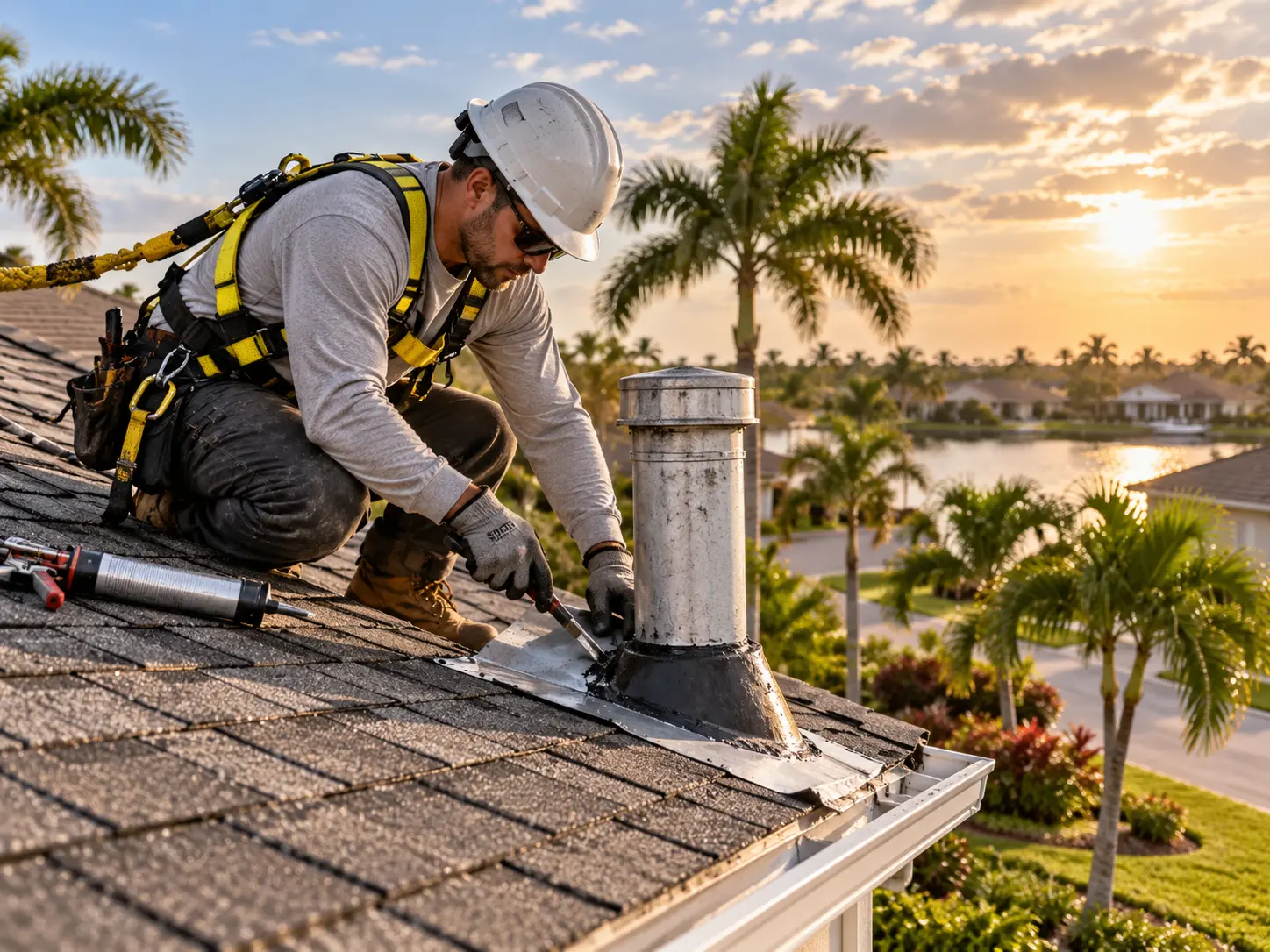
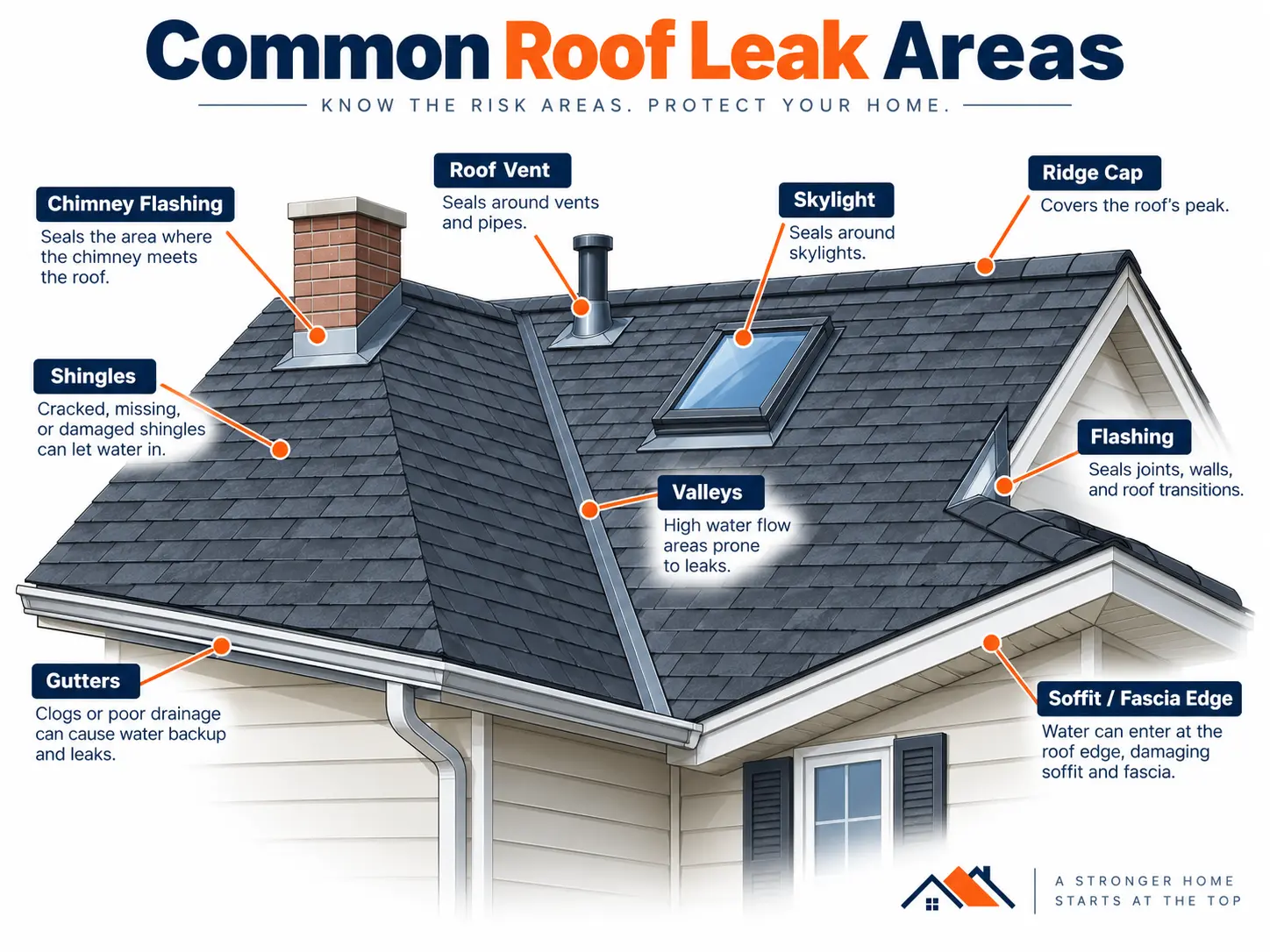
Flashing is the metalwork that manages every place the roof stops being a simple plane: where it meets a wall, a chimney, a skylight, a valley, or the edge of the building. It is unglamorous, it is mostly hidden, and it is responsible for a disproportionate share of roof leaks.
The reason is simple. The open field of a roof only has to shed water downhill. Transitions have to redirect water that is being channeled, splashed, or driven sideways, and they depend on correct overlap and layering rather than on sealant. When flashing is installed as a series of overlapping pieces it works for decades. When it is installed as a single piece held with caulk, it starts failing as soon as the caulk shrinks.
What you may notice
Signs of this problem on a Palm Bay roof
Leaks at an interior wall or chimney chase
Water appearing where the ceiling meets a wall very often traces to wall or step flashing rather than the roof field.
Visible sealant caked along a metal joint
Heavy caulk along flashing usually means a previous repair addressed a symptom instead of the overlap.
Rust or corrosion on flashing metal
Corroded flashing thins and perforates, and staining below it is often the first visible clue.
Lifted or bent flashing edges
Metal that has pulled away from the wall or roof surface no longer directs water where it was designed to go.
Missing counter flashing
Where flashing tucks into a wall, the counter piece protects the top edge. Without it, water runs behind everything.
Staining in the attic near a transition
Dark streaks on framing directly below a valley or wall junction point straight at the flashing above.
Why it happens
Common causes
Improper original installation
Step flashing installed as a continuous strip, or flashing laid over shingles rather than woven into courses, will eventually leak regardless of sealant.
Sealant-dependent repairs
Caulk and mastic shrink, crack and lose adhesion in Florida heat. Anything relying on them alone has a short service life.
Corrosion
Salt-influenced air and dissimilar metal contact both attack flashing, especially at fasteners and cut edges.
Thermal movement
Metal expands and contracts against masonry and framing that do not, which gradually loosens fasteners and opens joints.
Storm displacement
Wind can bend or pull flashing away from its intended position, particularly at gable ends and drip edges.
How the repair is approached
The affected transition is opened up enough to see how the existing flashing is actually layered, rather than judging from the surface. This is the step most sealant-based repairs skip.
Corroded, bent or incorrectly installed pieces are replaced with new metal formed for the specific condition — individual step pieces woven into shingle courses at a wall, proper valley metal, counter flashing let into masonry where appropriate.
Overlap and layering are restored so gravity does the work. Sealant is used as a secondary measure at specific joints, never as the primary water barrier.
Surrounding covering is re-installed correctly over the new flashing, and the drainage path above and below the transition is checked so runoff is not being concentrated somewhere it should not be.
What matters specifically in Palm Bay
Wind-driven rain is what makes flashing so important in Palm Bay. Water arriving horizontally can be pushed up and behind a flashing leg that would handle vertical rain perfectly well, which is why detail quality matters more here than in calmer climates.
Salt in the air across much of eastern Brevard County shortens the life of exposed flashing metal and fasteners, and it makes galvanic pairing mistakes show up faster.
Many Palm Bay homes have porch roofs, additions and multi-plane rooflines that create roof-to-wall transitions. Those junctions are where a large share of local leak calls originate.
Repair or replacement?
Flashing repair is almost always the right answer when the roof covering around it is sound. Replacing a chimney flashing or a run of step flashing is a targeted job with a long service life.
Full roof replacement enters the picture only when flashing problems coincide with widespread covering failure, or when so many transitions are failing simultaneously that the original installation quality is in question across the whole roof.
One caution: if a roof is genuinely near replacement, extensive flashing rebuilds may be money better folded into the larger project, since flashing is normally renewed during a re-roof anyway.
What affects the cost
Roof repair pricing depends on inspection findings. These are the variables that move it most.
Type of transition
A short length of step flashing is simple; a full chimney with counter flashing let into masonry is far more involved.
Linear footage involved
Valley and wall runs are priced by length, and long runs mean more removal and reinstallation of covering.
Metal selection
Aluminum, galvanized steel and copper differ in cost and in expected life, particularly near salt air.
Covering disturbance
Reaching flashing means removing and replacing shingles or tile around it, which adds labor and matching considerations.
Masonry work
Chimney repairs sometimes involve mortar joints or a reglet cut, which is additional specialized work.
Step by step
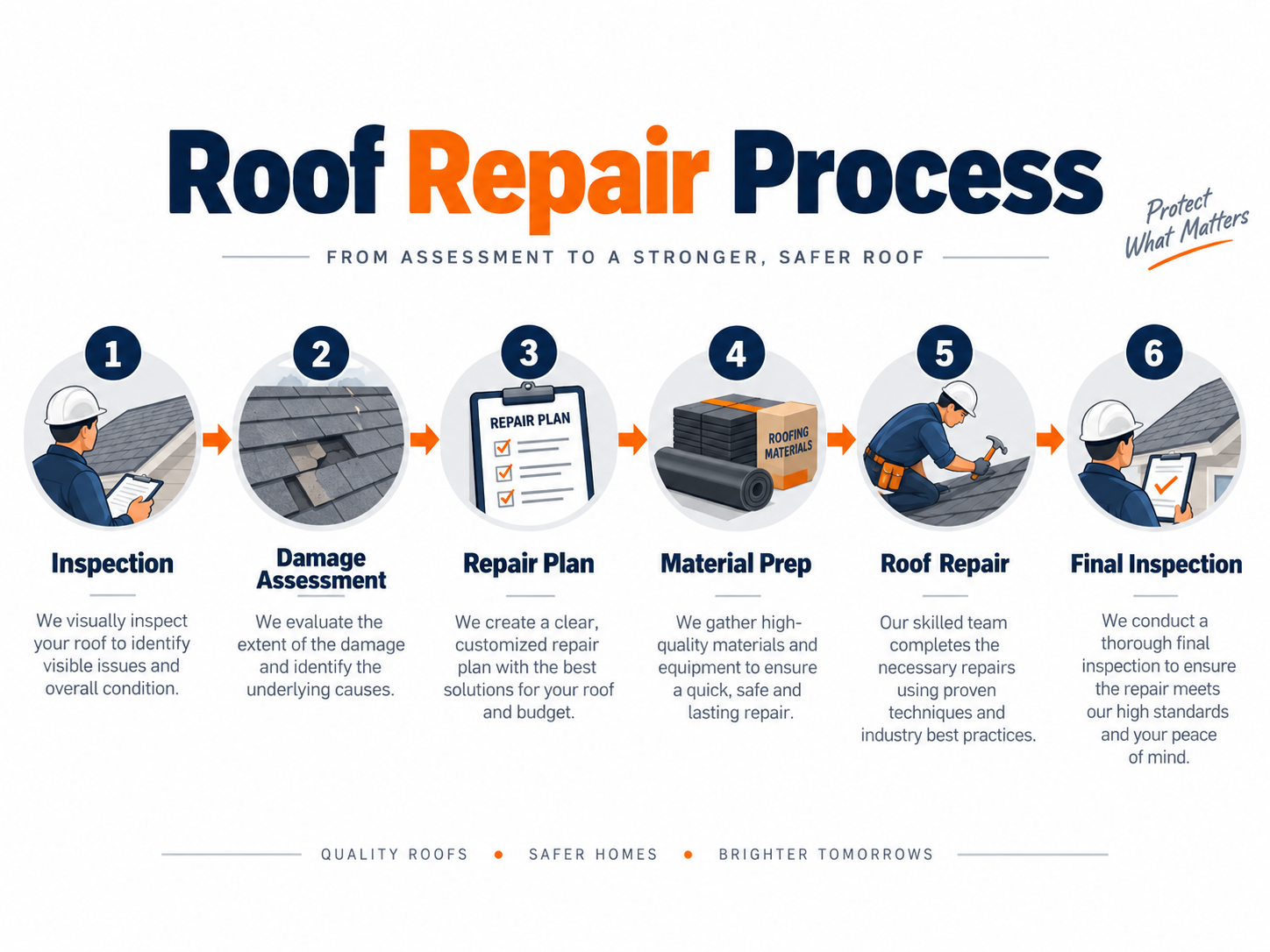
- 1Locate the leak and confirm the transition responsible
- 2Remove covering around the flashing to expose the actual layering
- 3Assess decking and underlayment at the transition
- 4Fabricate and install correctly lapped replacement flashing
- 5Reinstall covering with proper integration
- 6Review the drainage path above and below the repair
Roof Flashing Repair questions Palm Bay homeowners ask
Can flashing just be sealed instead of replaced?
Sealant has a role, but not as the primary barrier. Flashing works because overlapping pieces direct water back onto the roof surface using gravity — it is a mechanical solution, not a chemical one. Caulk applied over a badly lapped joint will hold for a while, then shrink, crack and let water back in, usually somewhere less obvious than before. If a previous repair left thick beads of sealant along a flashing line, that is generally a sign the underlying detail was never corrected and the leak is likely to return.
Why does my leak only appear when rain comes from one direction?
That is a textbook flashing symptom. A flashing leg that handles water running down the roof can be overwhelmed when rain is driven sideways into it, because the water is now moving in a direction the detail was not designed to resist. Wall flashing, gable-end details and chimney sides are the usual suspects. Telling the inspector which direction the wind was blowing during a leak event genuinely narrows the search, so it is worth noting when it happens.
What is the difference between step flashing and continuous flashing?
Step flashing is a series of individual L-shaped pieces, one per shingle course, each woven between courses so every piece overlaps the one below. Continuous flashing is a single long piece running the length of the transition. Step flashing is the correct method where a sloped roof meets a vertical wall, because it lets each course shed water onto the next. A continuous strip in that location seals only as long as its caulk does, which is why it is considered one of the more common installation defects behind wall leaks.
Does chimney flashing need to be replaced when the roof is repaired?
Not automatically, but it should always be inspected. Chimney flashing is a two-part system: base and step flashing on the roof side, and counter flashing tucked into the masonry above it. Those parts age at different rates, and mortar joints deteriorate independently of the metal. If the roof covering around the chimney is being disturbed anyway, that is the natural moment to correct any flashing deficiencies, because doing it later means removing the same shingles a second time.
How long should new flashing last?
Correctly installed flashing in an appropriate metal should serve for decades, often for the full life of the roof covering above it. The variables are metal choice, exposure and detailing quality. Near salt-influenced air, thinner or less corrosion-resistant metals age faster, and fasteners matter as much as the metal itself. What shortens flashing life most reliably is not weather but installation shortcuts — wrong laps, face-nailing through the visible surface, and reliance on sealant to make up the difference.
Get a roof repair estimate for your Palm Bay home
Describe what the roof is doing and the request can be connected with local roofing service providers who handle inspections and repairs.
Roof repair requests accepted 24/7.