Palm Bay, Florida
Emergency Roof Repair in Palm Bay, FL
Fast response for active water intrusion, open roof areas and post-storm damage, including temporary stabilization before permanent repair.
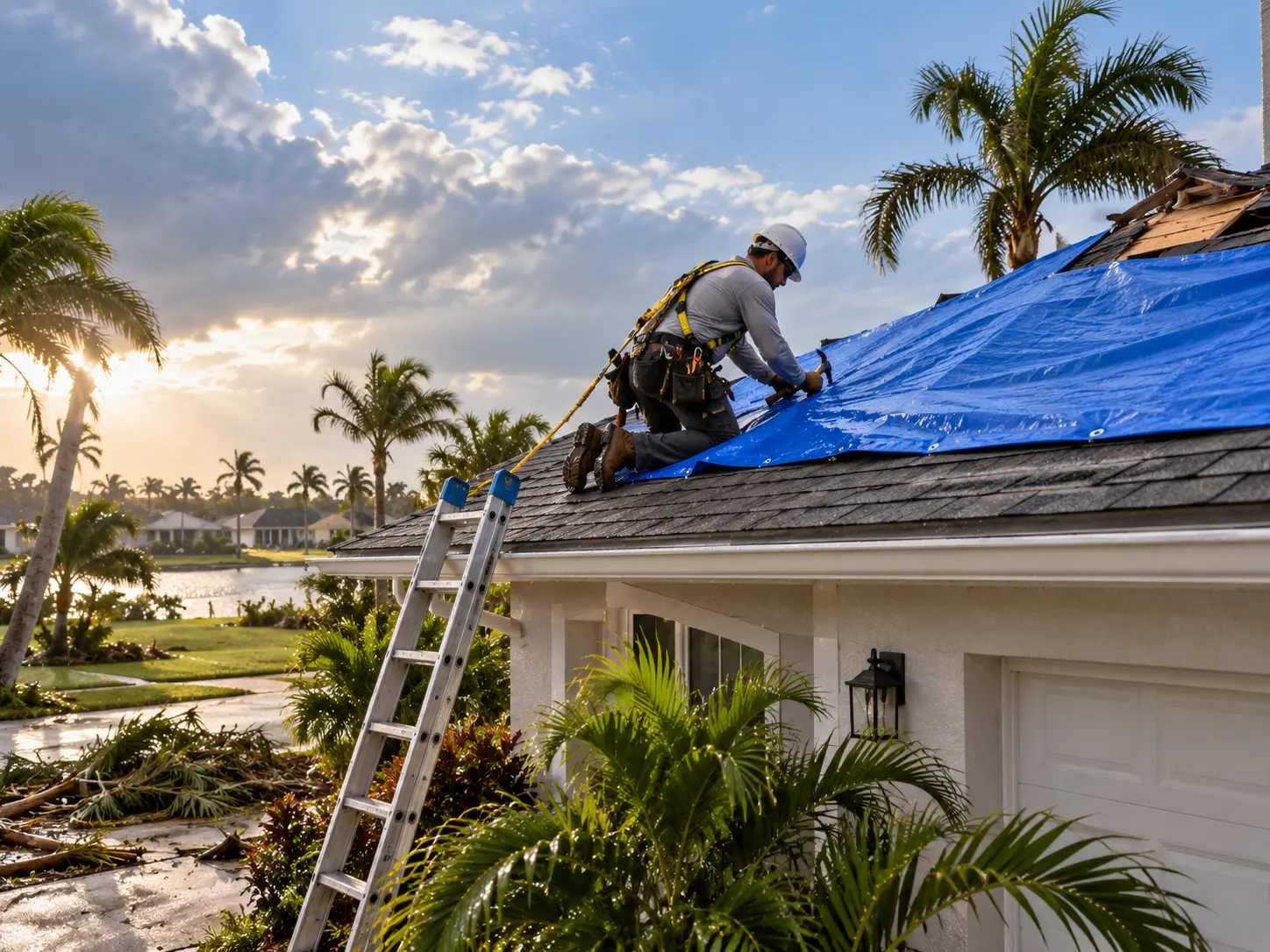
An emergency roof situation is one where water is entering the home right now, or where the roof surface is open enough that the next rain will cause damage. The priority in those moments is different from a scheduled repair: the goal is to stop or slow the water intrusion, protect the interior, and prevent a bad situation from becoming a structural one.
Requests are accepted around the clock. Practical response depends on weather and safety — nobody should be on a roof during lightning or high wind — but getting the request logged early means the property is in the queue as soon as conditions allow.
What you may notice
Signs of this problem on a Palm Bay roof
Water actively dripping indoors
Any visible dripping during rain means the roof assembly has been breached and the interior is accumulating damage with every hour.
A bulging or sagging ceiling
A ceiling that bows downward is holding trapped water. It is a safety hazard and should be treated as urgent.
Visible open decking or missing sections
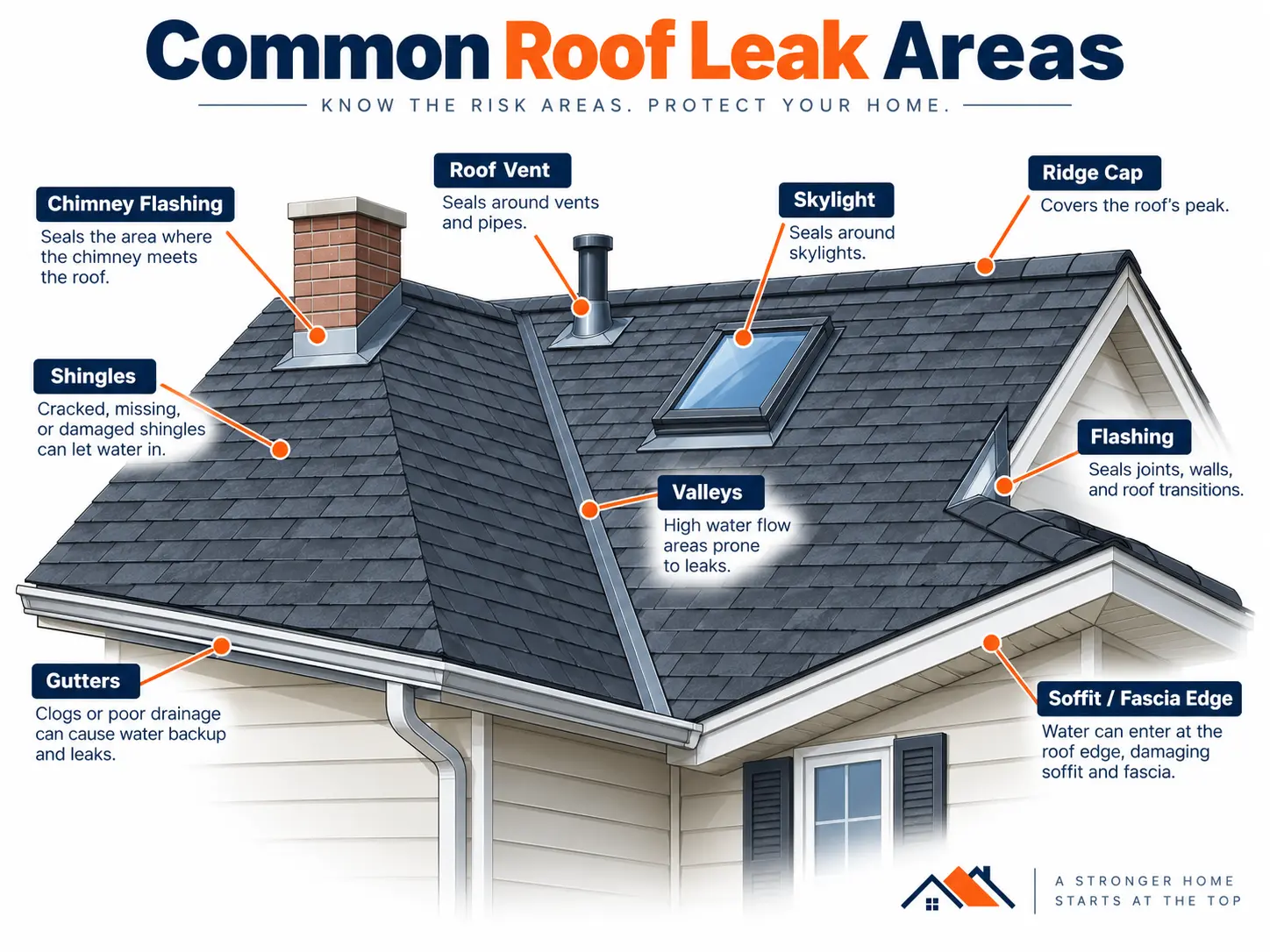
If shingles or panels have been torn away and you can see wood or underlayment from the ground, the roof has no reliable water barrier over that area.
Debris impact
A fallen limb or wind-blown object can puncture decking even when the surface damage looks small.
Wind-lifted roof edges
A section of shingles or metal panel flapping at the eave will progressively peel further with each gust.
Why it happens
Common causes
Severe thunderstorm winds
Palm Bay summer storms regularly produce gusts strong enough to break shingle seals and lift edges, especially on older roofs.
Tropical systems
Sustained wind combined with heavy, horizontally driven rain finds weaknesses that ordinary rain never reaches.
Falling limbs and debris
Trees near the roofline are a frequent source of puncture damage and displaced roof covering.
Sudden failure of an existing weak point
A boot or flashing joint that had been marginal for a while can fail completely during one heavy rain event.
Blocked drainage
Clogged gutters or valleys during a downpour can back water up under the roof edge fast enough to cause interior damage in a single storm.
How the repair is approached
The first step is stabilization. Depending on the situation that may mean installing a tarp over the affected area, securing loose roof covering, or sealing an open penetration so the interior stops taking on water.
Stabilization is deliberately temporary. It is designed to hold through the immediate weather, not to serve as the finished repair, and it should always be followed by a proper inspection and permanent work.
Once conditions are safe and dry, the full extent of damage is assessed — including decking, underlayment and any areas that were not obvious during the emergency response — and a permanent repair plan is put together.
Documentation is captured throughout. Photographs of the damage as found, before stabilization, are frequently useful to homeowners dealing with an insurance claim.
What matters specifically in Palm Bay
Brevard County's storm season concentrates emergency roof work into a few months of the year. During a widespread event, every roofing company in the area receives requests at once, which is why getting a request submitted early matters more here than in places with milder weather.
Wind-driven rain is the defining local factor. Water arriving at 40 miles per hour behaves nothing like water falling straight down: it gets under shingle courses, behind fascia, and through vents that would never leak in ordinary rain.
After a named storm, roofs that look undamaged from the driveway often have broken shingle seals across an entire slope. Those roofs are not emergencies yet, but they will leak in the next ordinary rainstorm, which is why a post-storm inspection is worth scheduling even without visible damage.
Repair or replacement?
Emergency work is stabilization first — that decision is not about repair versus replacement, it is about protecting the building. The bigger decision comes afterward.
If storm damage is confined to a defined area and the rest of the roof is intact, a permanent repair to that section is usually appropriate.
If wind has broken seals across large portions of the roof, or if multiple slopes have lost covering, the practical answer often moves toward replacement. That conversation should happen with inspection findings in hand, not during the emergency itself.
What affects the cost
Roof repair pricing depends on inspection findings. These are the variables that move it most.
Time of response
Work performed outside normal hours or during active weather involves additional labor considerations.
Size of the affected area
Tarping one slope is different from covering multiple planes or a complex roof with many intersections.
Height and access
Two-story and steep roofs require more equipment and setup, particularly in wet conditions.
Extent of interior water damage
The roof repair is one part; drying and repairing interior finishes is separate work that may involve other trades.
Whether permanent repair follows immediately
Combining stabilization with the permanent repair in one mobilization is usually more efficient than two separate visits.
Step by step
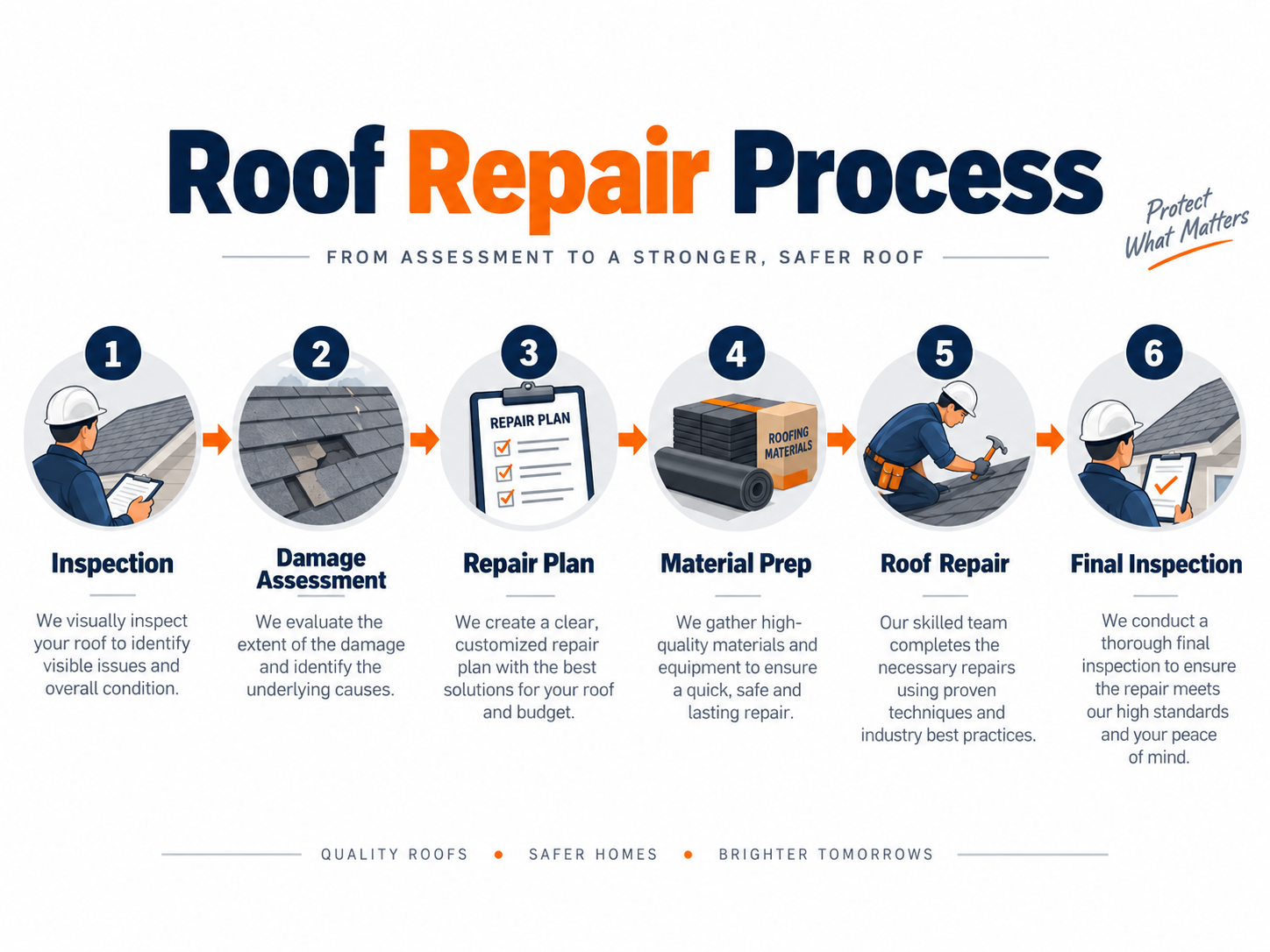
- 1Call intake and description of the active problem
- 2Safety assessment of weather and roof conditions
- 3Temporary stabilization such as tarping or securing loose material
- 4Photographic documentation of damage as found
- 5Full inspection once conditions permit
- 6Permanent repair plan and scheduling
Emergency Roof Repair questions Palm Bay homeowners ask
What should I do while I wait for help with an active leak?
Move or cover belongings under the leak if you can do it safely, and put containers down to catch the water. If the ceiling is bulging, keep people away from it. Do not touch light fixtures, ceiling fans or outlets near the wet area, and switch off the circuit if you can do so safely. Take photographs of what you see indoors, including timestamps if possible. Most importantly, do not climb onto a wet or storm-damaged roof — the fall risk is far greater than the additional damage a few hours will cause.
Does 'requests accepted 24/7' mean someone comes out immediately at any hour?
It means the request line is open at all hours and a submitted request gets logged and prioritized whenever it comes in. Whether a service provider can physically get on the roof depends on conditions. Lightning, sustained high wind, and darkness on a damaged roof are situations where sending anyone onto the roof would create a serious safety risk rather than solve a problem. A straightforward answer about what can be done immediately versus what has to wait for daylight or a break in the weather should be part of that conversation.
Is a tarp a repair?
No. A tarp is a temporary water barrier meant to protect the interior until a permanent repair can be completed properly. A well-installed tarp can hold for weeks, but it is fastened to the roof, it degrades in UV, and it is not a substitute for restoring the roof covering. Treat it as a bridge. The important thing is that the permanent repair gets scheduled rather than the tarp becoming a long-term solution, which is a common and expensive mistake after widespread storm events.
Should I file an insurance claim before calling a roofer?
Either order works, but documentation helps in both cases. Photographs of the damage as it was found, before any tarping or cleanup, are the most valuable thing a homeowner can have. Many homeowners find it useful to have an inspection first so they understand the scope of the damage before deciding whether a claim makes sense relative to their deductible. A service provider can supply documentation of what is observed during an inspection; the claim decision and its handling remain between the homeowner and the insurer.
My roof lost shingles but nothing is leaking yet. Is that an emergency?
It is urgent rather than an emergency. Missing shingles leave the underlayment exposed, and underlayment is a secondary barrier designed to be temporary, not to face direct sun and rain. Depending on the type and condition it may hold for days or weeks, but it will not hold indefinitely, and the next heavy rain may push water past it. Getting it inspected and repaired before the next storm system is far less expensive than dealing with the leak that follows.
Related roof repair services
Palm Bay areas covered
Get a roof repair estimate for your Palm Bay home
Describe what the roof is doing and the request can be connected with local roofing service providers who handle inspections and repairs.
Roof repair requests accepted 24/7.