Palm Bay, Florida
Hurricane Roof Repair in Palm Bay, FL
Repairs after hurricanes and tropical storms, from stabilizing open roof areas to restoring wind-damaged covering, ridges and flashing.
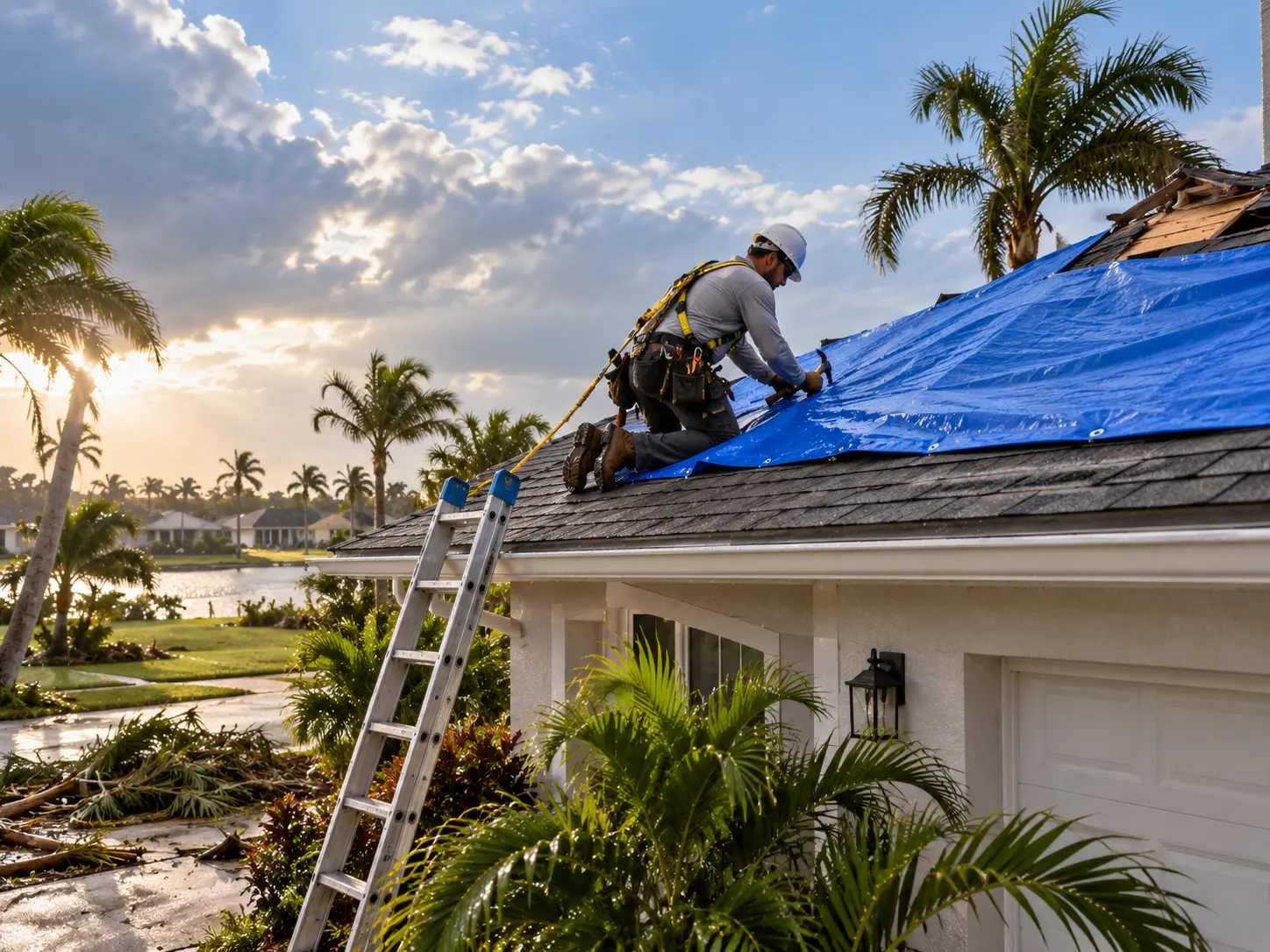
Hurricane and tropical storm damage differs from ordinary storm damage in scale and in duration. A named system can subject a roof to hours of sustained wind and horizontally driven rain, rather than the fifteen violent minutes of a summer thunderstorm. That sustained loading finds every weak point in the assembly and pushes water into places ordinary rain never reaches.
Post-tropical-system work usually happens in two phases: stabilize what is open so the interior stops taking damage, then return for a full assessment and permanent repair once conditions allow safe, dry work. Trying to compress those into one step during a bad week rarely produces a durable result.
What you may notice
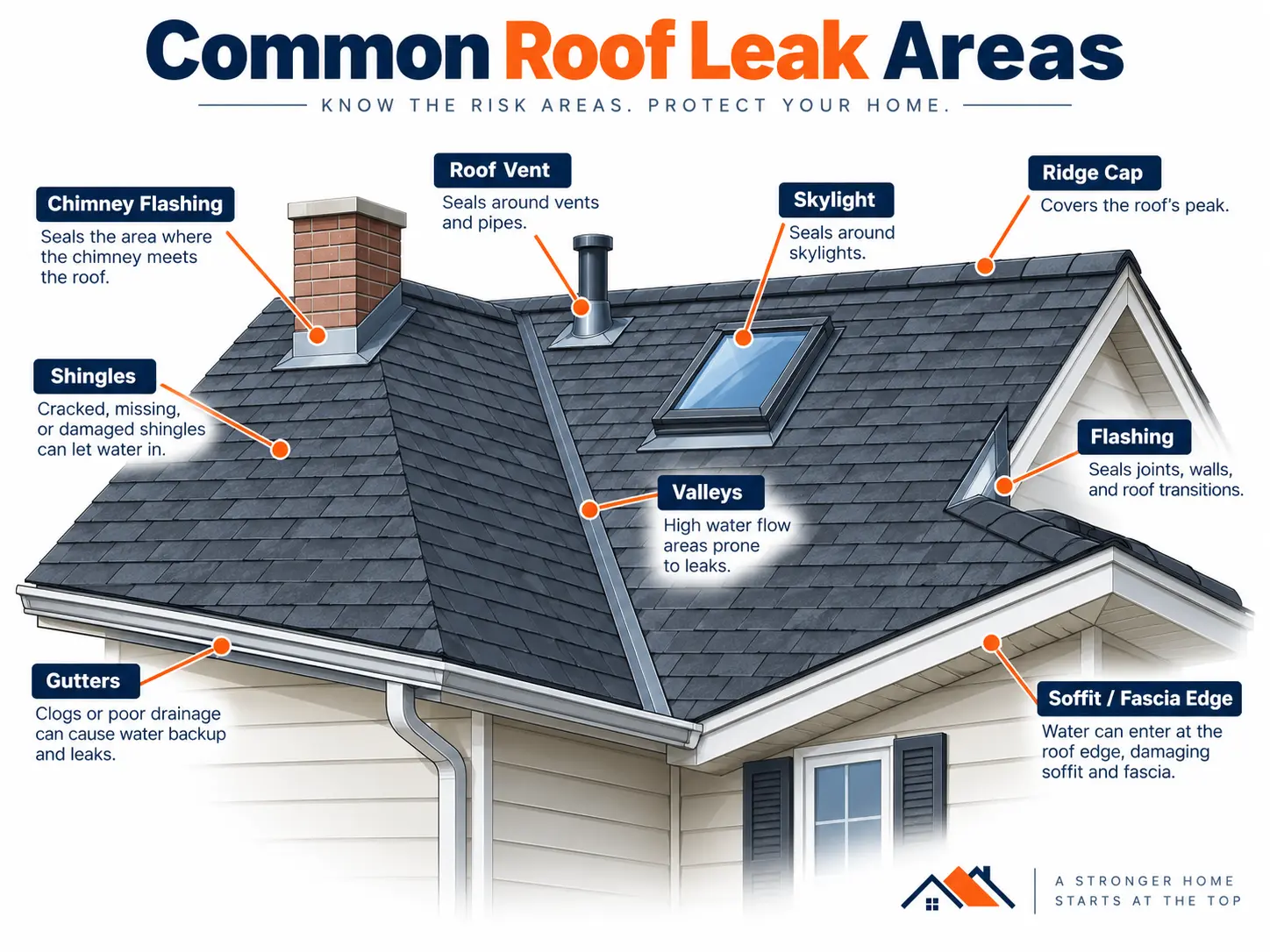
Signs of this problem on a Palm Bay roof
Large areas of missing covering
Sustained wind can strip entire courses or slopes rather than individual tabs.
Lifted or peeled roof edges
Uplift concentrates at eaves and rakes, and a peeled edge progresses inward with every hour of wind.
Displaced ridge and hip components
Ridge caps and hip tiles are among the first components to move under tropical wind loading.
Water intrusion at multiple points
Horizontal rain over many hours can produce leaks in several rooms at once, often at exterior walls.
Structural debris impact
Larger wind-borne objects can penetrate decking, not just the roof covering.
Soffit and fascia damage
Pressure and driven rain frequently damage the roof edge assembly, allowing water into the attic from below the roof line.
Why it happens
Common causes
Sustained high wind
Hours of continuous uplift break seals, fatigue fasteners and progressively work covering loose.
Prolonged wind-driven rain
Water is pushed uphill under courses and behind flashing for hours rather than minutes.
Pressure differentials
Wind flowing over a roof creates lift, and openings elsewhere in the building can increase internal pressure pushing outward on the roof deck.
Wind-borne debris
Anything not secured becomes a projectile in a tropical system, including material from neighboring properties.
Cumulative prior damage
Roofs that took unrepaired damage in earlier storms are markedly more vulnerable in the next one.
How the repair is approached
Immediately after a system passes, priority goes to properties with active intrusion or open roof areas. Tarping and securing loose material limit further interior damage.
Once conditions allow, every slope is inspected in detail. Tropical damage is rarely limited to one visible area, and finding the secondary damage matters as much as the obvious hole.
The attic is inspected wherever accessible. Sustained driven rain frequently deposits water into insulation and along framing without producing an immediate ceiling stain.
Permanent repairs restore each affected assembly correctly — decking where penetrated, underlayment where torn, covering with proper fastening, and edge metal and flashing re-installed rather than patched with sealant.
What matters specifically in Palm Bay
Palm Bay sits in a part of Brevard County that has taken direct and glancing hits from tropical systems repeatedly. Roofs here accumulate history, and a roof that has weathered several systems without inspection often carries unresolved damage from earlier ones.
Homes near open water, lakes and retention areas experience less obstructed wind. Those exposures show up in where damage concentrates on a given street.
Demand after a landfall is intense and county-wide. Realistic expectations matter: stabilization comes first for everyone, and permanent repairs are sequenced as materials and crews allow. Anyone promising immediate full replacement for every caller during that week is not being straightforward.
Repair or replacement?
Repair makes sense when damage is confined and the underlying roof was in good condition beforehand — a section of covering lost, a damaged ridge, a punctured area of decking.
Replacement becomes the realistic path when multiple slopes lost covering, when seals are broken across most of the roof, or when the roof had already reached the later part of its life before the storm arrived.
In either case, the decision should follow a documented inspection. Post-storm is exactly when homeowners are most likely to be pushed toward a decision without evidence, and that is worth resisting.
What affects the cost
Roof repair pricing depends on inspection findings. These are the variables that move it most.
Scale of damage
Tropical damage is often multi-slope, and scope drives everything else.
Emergency stabilization
Tarping large or complex roofs takes materials, labor and a separate mobilization.
Decking and structural repair
Penetrated or delaminated sheathing must be replaced before covering is restored.
Material availability
After a widespread event, lead times and availability can affect scheduling.
Permit requirements
Larger scopes of work may require permitting through the local building department, which is a real part of the timeline.
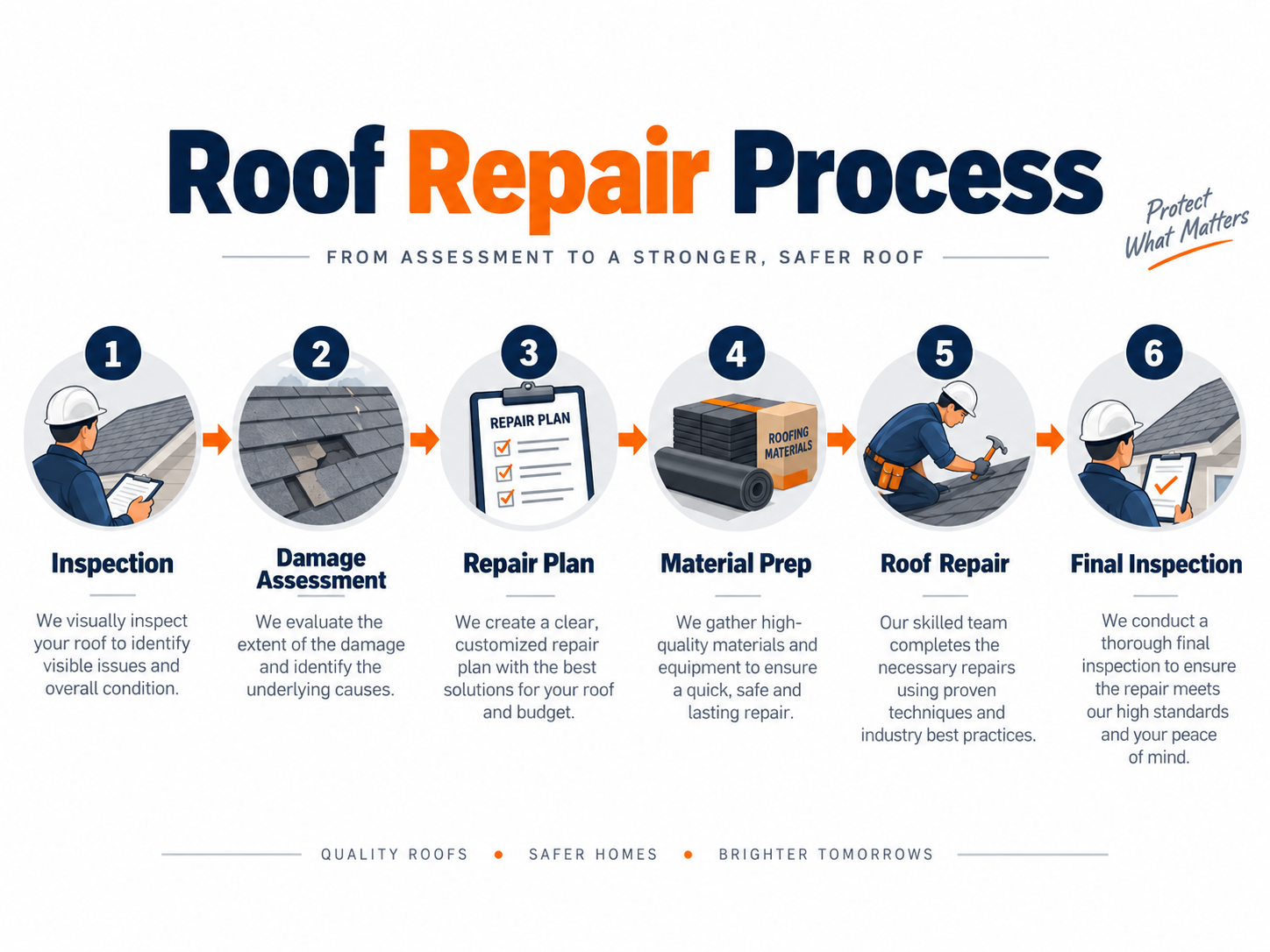
Step by step
- 1Emergency intake and prioritization of active intrusion
- 2Temporary stabilization of open areas
- 3Comprehensive multi-slope inspection once safe
- 4Attic and interior assessment
- 5Documented repair scope with options
- 6Permanent repair, including decking and edge components
Hurricane Roof Repair questions Palm Bay homeowners ask
How long can a tarp stay on my roof after a hurricane?
A properly installed tarp is a short-term measure. It is fastened through the roof surface, it degrades under UV, and its seams and edges are vulnerable to the next wind event. Weeks are realistic; many months are not, though after a major landfall some homeowners have little choice while waiting for crews and materials. The important thing is that the tarp is monitored and the permanent repair stays scheduled. A tarp that has been forgotten for a year usually means additional damage underneath it.
Why does damage sometimes show up months after a hurricane?
Because sustained wind breaks shingle seals and stresses flashing without necessarily removing anything. The roof continues to shed ordinary rain for a while, then a normal storm arrives and the loosened materials fail. Water intrusion that started during the hurricane can also take time to become visible indoors, particularly if it soaked into insulation first. This delayed pattern is one of the strongest arguments for an inspection after any named system, even when the roof appears untouched.
Does my roof need to be replaced after every hurricane?
No, and it is worth being skeptical of anyone who says otherwise before inspecting. Plenty of roofs come through tropical systems with damage limited to ridge caps, edge metal, a few slopes' worth of shingles or one penetration. Those are repairs. Replacement is the honest recommendation when the inspection shows widespread seal failure, extensive material loss, or damage compounding an already aged roof. The evidence should drive the recommendation, not the fact that a storm occurred.
Should I do anything to prepare my roof before a storm?
A few things genuinely help. Have any known damage repaired before storm season rather than after, because existing weak points fail first. Keep gutters and valleys clear so heavy rain drains instead of backing up. Trim limbs that overhang or touch the roof. Secure loose items in the yard that could become projectiles. Beyond that, avoid last-minute measures like spraying sealant across the roof — they rarely help and can complicate the repair afterward.
What happens if the decking under my roof was damaged?
It has to be addressed before new covering goes on, because fasteners will not hold reliably in compromised sheathing and the repair would fail early. Damaged decking usually shows up as soft or spongy areas, delaminated plywood, or visible penetration from debris. The affected panels are removed and replaced with matching thickness material, fastened to the framing, and then the underlayment and covering are restored over them. Hidden decking damage is one of the most common reasons a post-storm scope grows once work begins.
Related roof repair services
Palm Bay areas covered
Get a roof repair estimate for your Palm Bay home
Describe what the roof is doing and the request can be connected with local roofing service providers who handle inspections and repairs.
Roof repair requests accepted 24/7.