
Palm Bay, Florida
Storm Damage Roof Repair in Palm Bay, FL
Post-storm assessment and repair of wind-lifted covering, debris impact, damaged flashing and broken shingle seals.
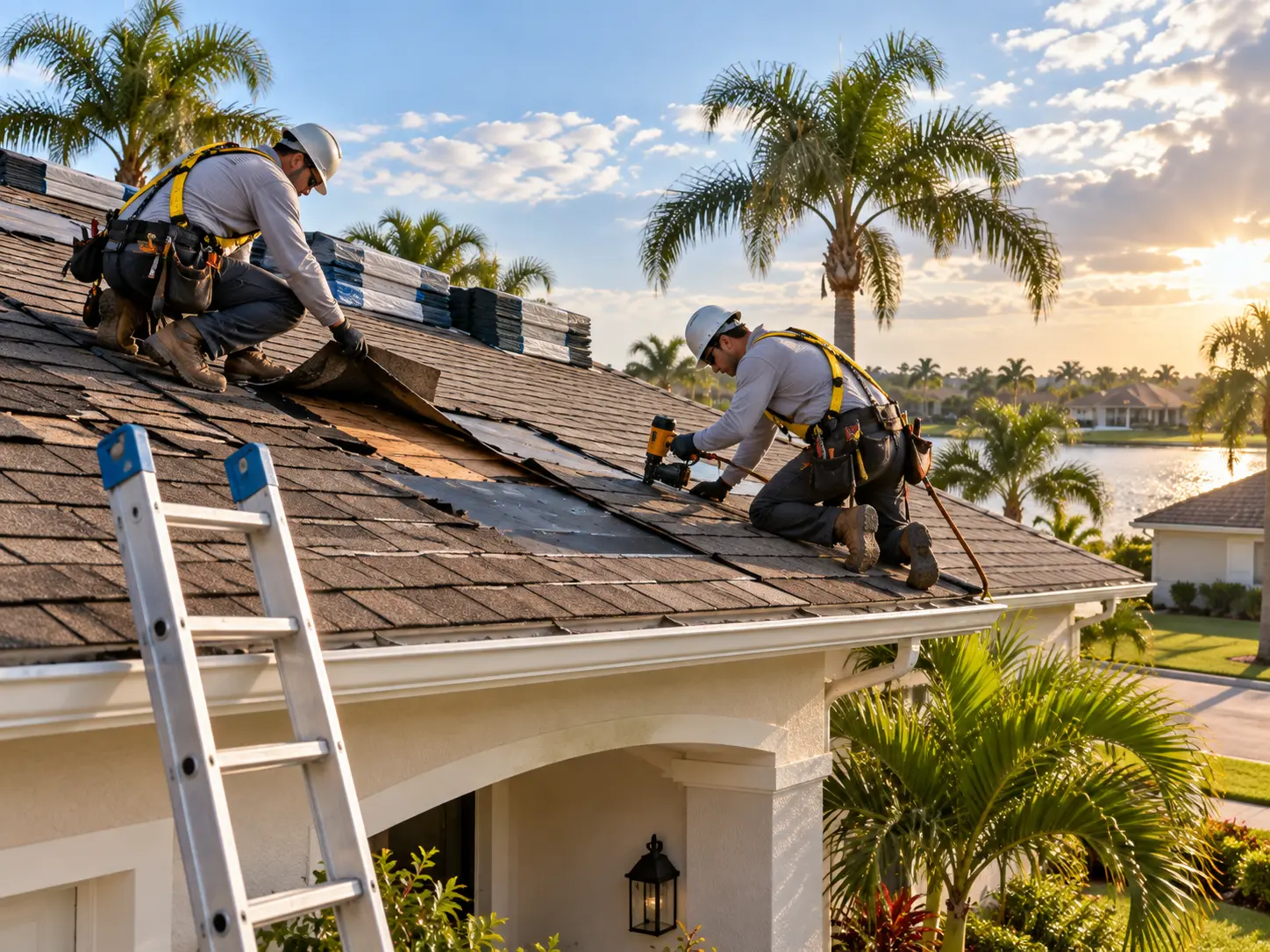
Storm damage to a roof falls into two categories, and only one of them is visible from the driveway. Obvious damage — missing shingles, a limb through the decking, a displaced ridge line — gets attention immediately. Concealed damage, mostly broken shingle seals and stressed flashing, is what causes leaks weeks or months later in what feels like an ordinary rainstorm.
A thorough post-storm assessment looks for both. That means examining the windward slopes closely, checking whether shingle tabs still resist a gentle lift, inspecting every penetration and transition, and looking in the attic for evidence of water that has already entered.
What you may notice
Signs of this problem on a Palm Bay roof
Missing or torn shingles
The most obvious sign, and usually concentrated on the slope that faced the wind.
Creased or folded shingle tabs
A horizontal crease across a shingle means it was folded back by wind and set down again. The mat is fractured even though the shingle is still in place.
Debris strike marks
Dents, punctures or scattered granule loss where wind-borne objects hit the surface.
Displaced ridge caps or drip edge
Perimeter and ridge components take the highest uplift and often move before the field does.
Gutters pulled loose or dented
Damage at the eave often accompanies roof edge damage that is harder to see.
New interior stains after the storm
Any fresh ceiling or wall staining following a storm should be traced, even if the roof looks intact.
Why it happens
Common causes
Wind uplift on the windward slope
Pressure differentials lift shingle edges and break the adhesive bond that keeps courses sealed together.
Wind-driven rain
Rain pushed horizontally penetrates under courses, behind flashing and through vents that shed vertical rain without difficulty.
Impact from debris
Limbs, palm fronds and loose objects from neighboring properties cause punctures, cracks and granule loss.
Pressure at roof edges and corners
Uplift forces concentrate at eaves, rakes, ridges and corners, which is why damage so often starts at the perimeter.
Pre-existing weak points
An aging boot, a marginal flashing joint or a previously repaired area frequently fails first under storm loading.
How the repair is approached
The inspection is systematic and documented. Every slope is reviewed, with particular attention to the direction the storm came from, and findings are photographed as they are found.
Seal integrity is checked, not just visible damage. A shingle that lifts easily by hand has lost its bond, and a slope full of unsealed shingles is a genuine finding even if nothing is missing.
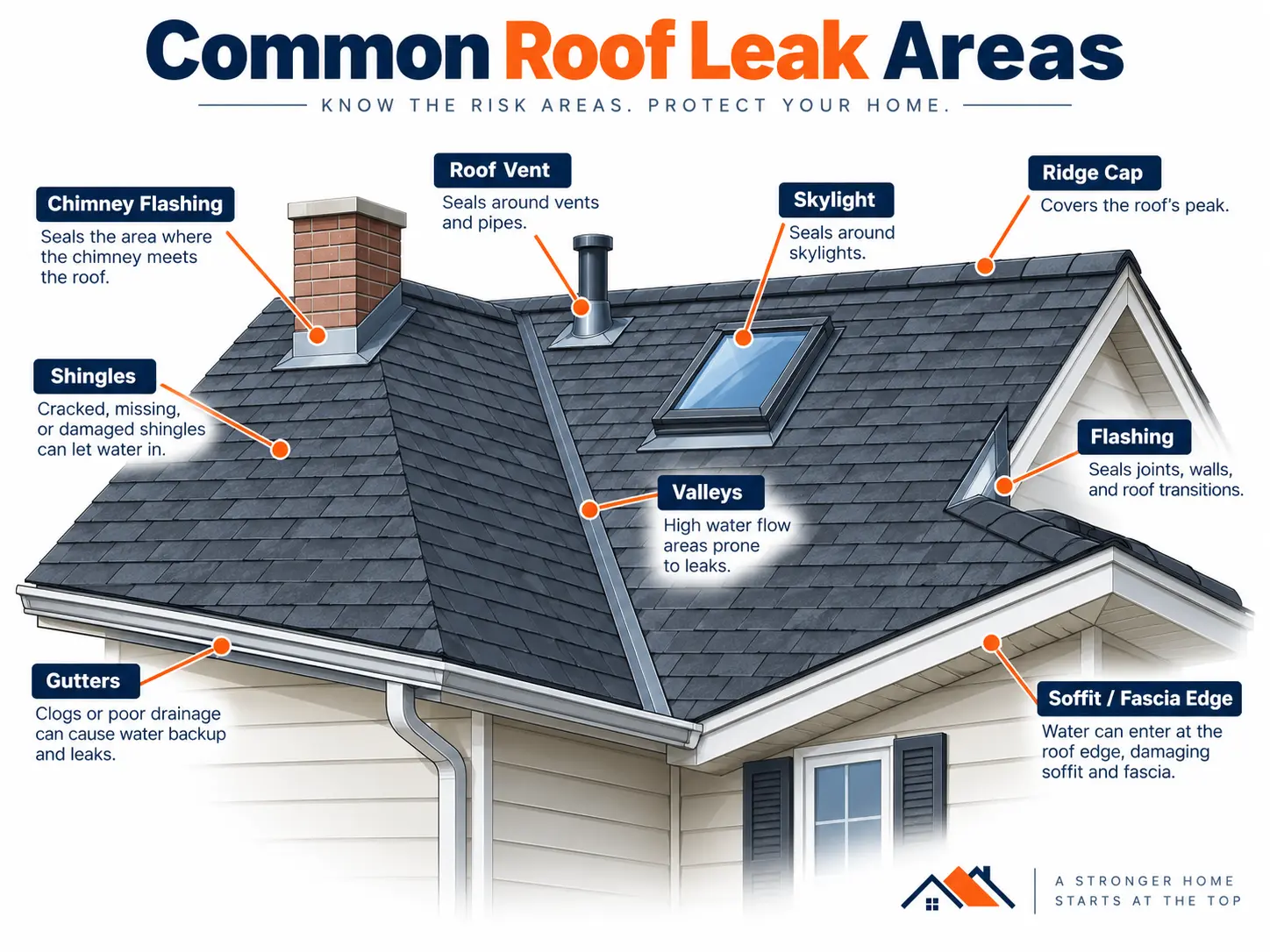
Penetrations, flashing, ridge, drip edge and valleys are inspected individually. These components fail differently from the field of the roof and often show storm effects first.
Repairs restore the affected components properly — replacing creased shingles rather than pressing them flat, re-installing ridge caps with correct fastening, and re-lapping or replacing flashing rather than sealing over displacement.
What matters specifically in Palm Bay
Palm Bay gets two distinct storm patterns. Summer convective storms bring short, violent downpours and localized gusts almost daily during the wet season. Tropical systems bring sustained wind and hours of horizontally driven rain. The damage profiles are different, and so is what you should look for afterward.
Homes on open lots, backing to lakes and retention ponds, or at the edge of a subdivision take stronger, less obstructed wind than houses in the middle of a densely built street.
Because widespread events generate a surge of demand across Brevard County, getting an inspection scheduled promptly after a significant storm makes a practical difference in how quickly repairs can happen.
Repair or replacement?
Repair fits when damage is localized — one slope, a defined area, a handful of components — and the rest of the roof still shows sound sealing and material condition.
Replacement enters the conversation when seals are broken across multiple slopes, when a large percentage of shingles show creasing, or when the roof was already near the end of its service life before the storm.
Insurance considerations often shape this decision as well. Documentation of what was found, where, and in what condition is useful regardless of which direction the decision goes.
What affects the cost
Roof repair pricing depends on inspection findings. These are the variables that move it most.
Extent and distribution of damage
Damage on one slope is a contained repair; damage across the whole roof is a different project.
Whether temporary protection is needed
Tarping before permanent repair adds a mobilization but prevents further interior damage.
Decking involvement
Debris impact and prolonged exposure can require sheathing replacement, which is additional material and labor.
Component types affected
Flashing, ridge and valley repairs cost more per unit than field shingle replacement.
Documentation needs
Detailed photo documentation for an insurance claim takes additional inspection time.
Step by step
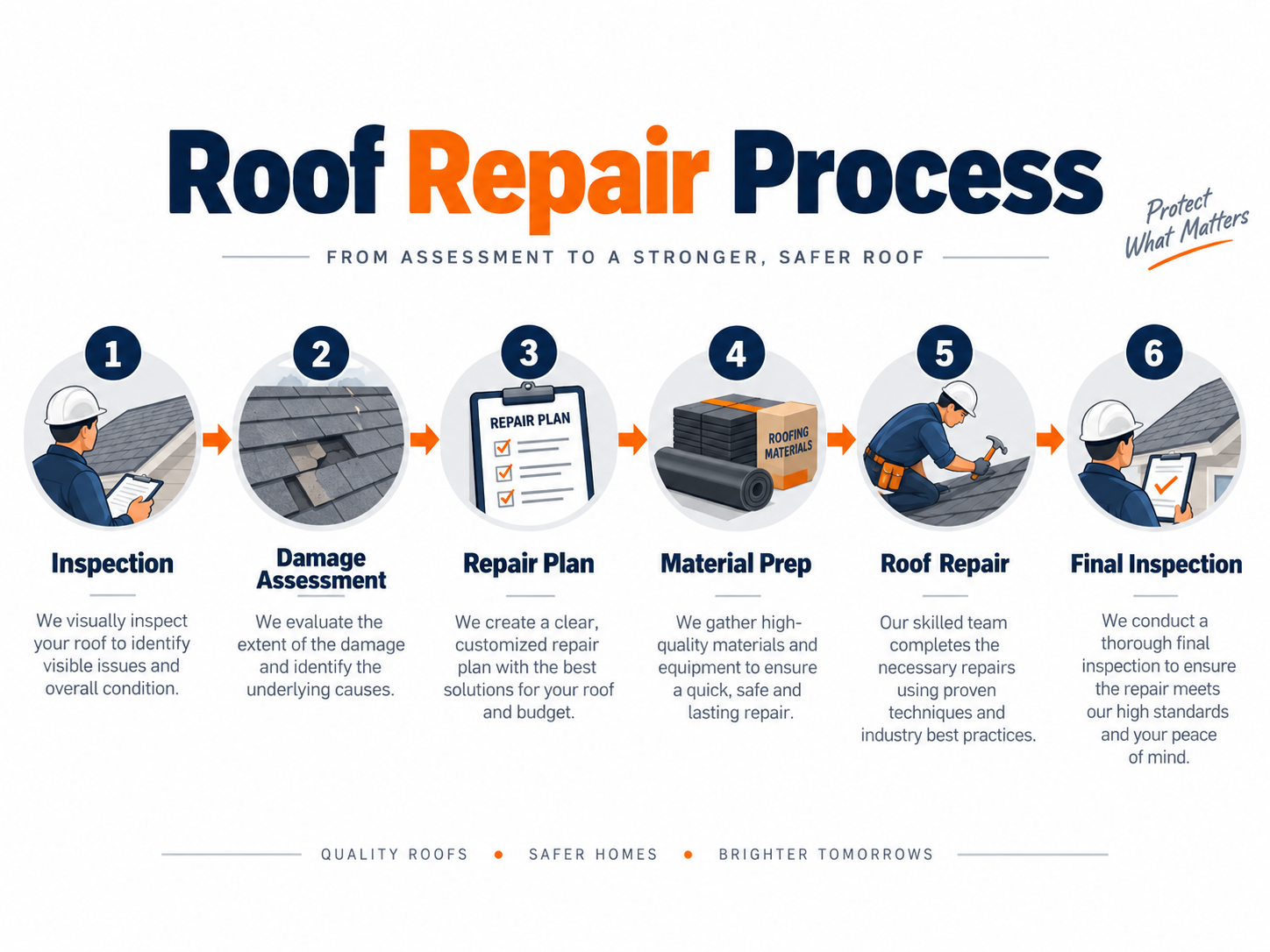
- 1Full post-storm inspection of all slopes and components
- 2Photographic documentation of every finding
- 3Interior and attic check for water intrusion evidence
- 4Temporary protection if the roof is open
- 5Written scope of the repairs needed
- 6Permanent repair and final review
Storm Damage Roof Repair questions Palm Bay homeowners ask
My roof looks fine after the storm. Do I still need an inspection?
It is worth doing, because the most common form of wind damage is invisible from the ground. When wind breaks the adhesive seal between shingle courses, nothing changes visually — the shingles stay in place and the roof looks normal. But those shingles are now loose flaps, and the next moderate storm can remove them. Homeowners are frequently surprised to lose shingles in a routine afternoon thunderstorm months after a named storm. That is why post-storm inspections focus on seal integrity, not just missing material.
What is a creased shingle and why does it matter?
A crease is a horizontal fold line across a shingle, left when wind lifted the tab backward and it dropped back into place. From above it can look almost normal. But the asphalt mat and the fiberglass reinforcement inside have been fractured along that line, and the surface granules along the crease are usually disturbed. Water will eventually work through the fracture, and the shingle has lost most of its wind resistance. Creased shingles need replacement, not flattening or sealing.
How soon after a storm should I have the roof checked?
Within days if there is any visible damage or any interior sign of water, and within a few weeks even if everything looks fine. Two things drive that timing. First, exposed underlayment and open areas degrade quickly in Florida sun and rain. Second, after any widespread event, demand across Brevard County spikes and scheduling becomes harder. Getting on the list early also means damage is documented while it is fresh, which is generally useful if an insurance claim follows.
Do you handle the insurance claim for me?
A service provider can document what is found — photographs, descriptions of damage, and a scope of repairs believed to be needed — and that documentation is the homeowner's to use. The claim itself, including how it is filed, adjusted and settled, is between the homeowner and the insurance carrier. Reputable guidance avoids promising claim outcomes, since no one outside the insurer controls them. What can reasonably be offered is an accurate, well-documented picture of the roof's actual condition.
Can hail damage roofs in Palm Bay?
Hail is less frequent here than in the central United States, but strong convective storms in Brevard County can produce it. Hail damage on asphalt shingles typically appears as scattered soft spots where granules have been knocked away and the mat is bruised, often visible as darker circular marks. It is different in appearance from wind or debris damage. If a storm brought hail, it is worth having the roof looked at specifically for that pattern, since bruising is easy to miss from the ground.
Get a roof repair estimate for your Palm Bay home
Describe what the roof is doing and the request can be connected with local roofing service providers who handle inspections and repairs.
Roof repair requests accepted 24/7.