Palm Bay, Florida
Roof Inspection in Palm Bay, FL
A documented assessment of covering, flashing, penetrations, drainage and attic evidence, with clear findings and repair options.
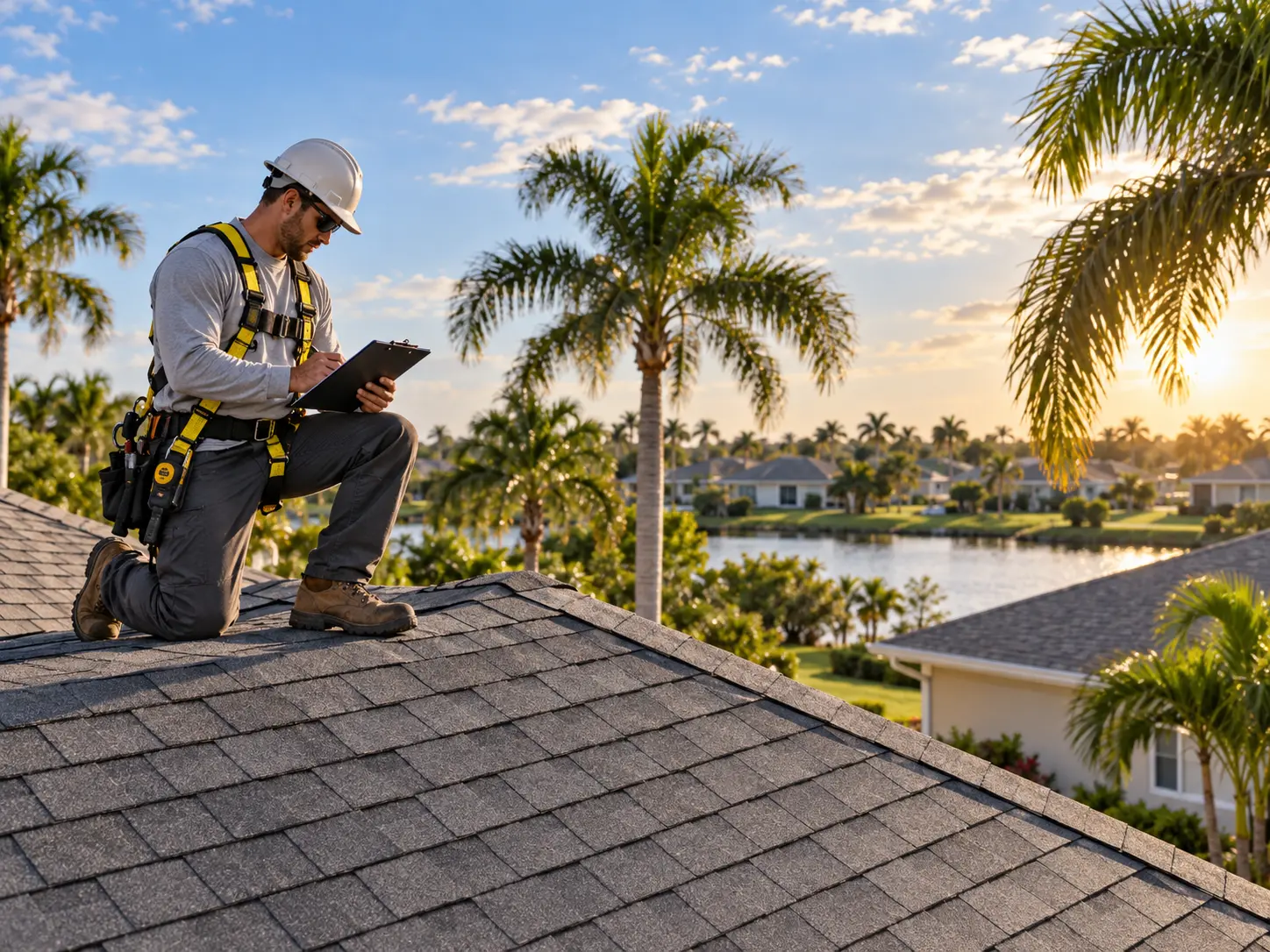
An inspection is the part of roofing that determines whether everything after it is money well spent. Without one, repairs are guesses, and homeowners end up paying twice: once for the wrong fix, then again for the right one. With one, the conversation shifts from 'something is wrong up there' to a specific list of components, their condition, and what each one needs.
Inspections serve several distinct purposes in Palm Bay: diagnosing an active leak, assessing damage after a storm, establishing condition before buying or selling a home, and simply understanding how much service life a roof has left before budgeting for it.
What you may notice
Signs of this problem on a Palm Bay roof
Any interior stain, new or growing
Interior evidence should always be traced, even when the roof looks fine from outside.
After any significant storm
Wind damage is frequently invisible from the ground, and broken shingle seals are the most common finding.
Before buying or selling a home
Roof condition is one of the largest single variables in a residential transaction.
When the roof's age is uncertain
Knowing where a roof sits in its service life makes planning and budgeting realistic.
Before storm season
Correcting known weak points before June is cheaper than repairing them in September.
After work by other trades
Solar installation, satellite mounting, HVAC service and pressure washing all create roof access that sometimes leaves damage.
Why it happens
Common causes
Progressive material aging
Roofs deteriorate gradually and quietly. Inspections catch the transition from 'aging' to 'failing'.
Concealed storm damage
Broken seals, creased shingles and stressed flashing rarely announce themselves.
Component-level failures
Boots, flashing and vents fail on shorter timelines than the covering around them.
Drainage problems
Clogged gutters and valleys cause damage that has nothing to do with the roof covering itself.
Attic moisture
Ventilation and condensation issues are found from inside, not from the roof surface.
How the repair is approached
The inspection starts at ground level with an overall assessment of the roof planes, drainage, fascia and any visible displacement, then moves to the attic where accessible, because the underside of the decking tells a story the surface cannot.
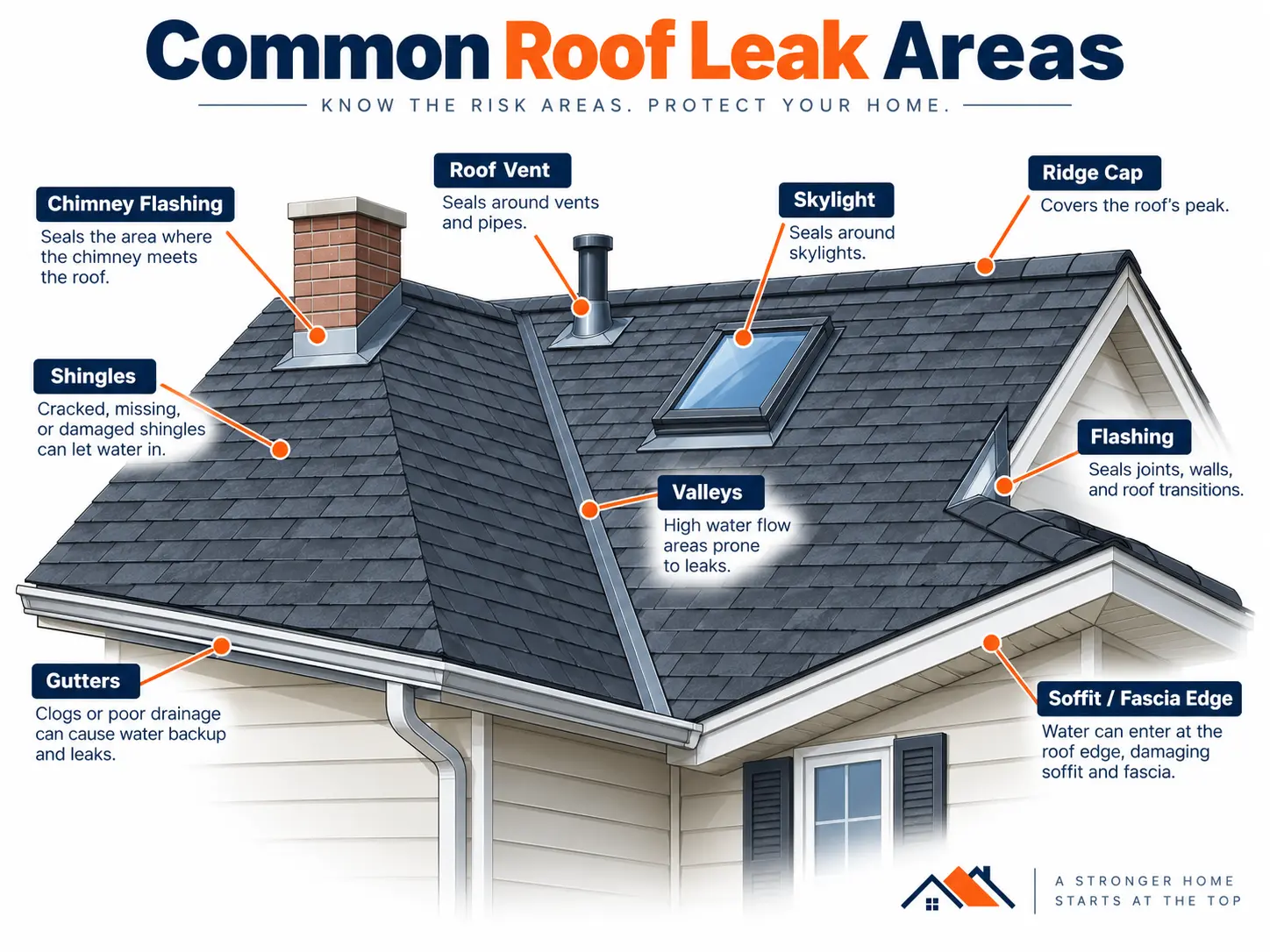
On the roof, each system is checked in turn: field covering and seal integrity, valleys, ridges and hips, every penetration, all flashing and transitions, drip edge, and gutters.
Findings are typically photographed as they are found, so the homeowner can see the condition of components not otherwise visible, and each item is generally described in plain language with its practical significance.
The result is a set of findings and options, not a single sales recommendation. Some items need attention now, some should be monitored, and some are cosmetic. Distinguishing those honestly is the point of the exercise.
What matters specifically in Palm Bay
Post-storm inspections can be one of the more valuable roofing services in Brevard County, because the damage that causes next year's leak is often invisible today. Broken adhesive seals can leave a roof looking untouched while making it far more vulnerable to the next ordinary storm.
Pre-season inspections in spring are worth scheduling. Correcting a cracked boot or a lifted flashing leg in April is a routine repair; the same defect discovered during a September tropical system is an emergency.
Palm Bay roofs also age on an accelerated clock because of UV and heat, so an inspection interval that would be excessive in a mild climate is reasonable here.
Repair or replacement?
The inspection is what makes the repair-or-replace conversation honest. Age alone is a weak signal; condition of the covering, the number and distribution of failures, and the state of the decking are what actually matter.
A good inspection should indicate not just what is wrong now but what is likely to need attention in the next few years, helping a homeowner decide whether spending on repairs makes sense or whether that money is better applied to replacement.
If an inspector recommends replacement without providing supporting evidence, requesting the photographs is reasonable. Documentation is the difference between an assessment and a sales pitch.
What affects the cost
Roof repair pricing depends on inspection findings. These are the variables that move it most.
Roof size and complexity
More planes, valleys and penetrations mean more to inspect.
Height and access
Multi-story and steep roofs require additional safety setup.
Attic accessibility
An accessible attic allows a much more complete assessment than a roof-only inspection.
Depth of documentation
A detailed photo report for insurance or a real estate transaction takes more time than a leak diagnosis.
Roof type
Tile roofs require careful access and sometimes lifting tile to assess underlayment condition.
Step by step
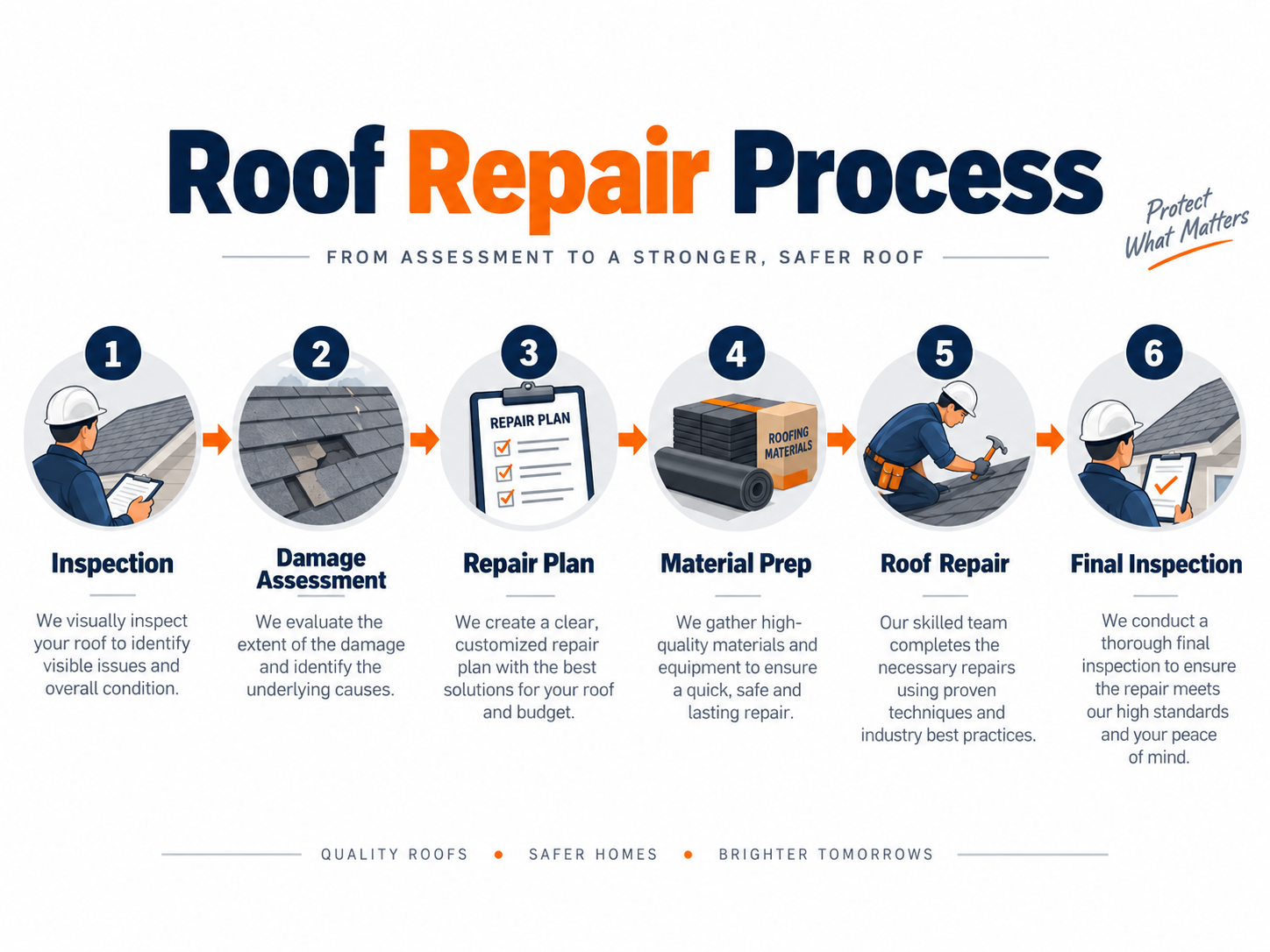
- 1Ground-level assessment of planes, drainage and roof edge
- 2Attic inspection for staining, daylight, moisture and ventilation
- 3Roof-surface review of covering and seal integrity
- 4Component check of penetrations, flashing, valleys and ridge
- 5Photographic documentation of all findings
- 6Written summary with prioritized options
Roof Inspection questions Palm Bay homeowners ask
How often should a Palm Bay roof be inspected?
For most homes here, roughly every two years is sensible, plus after any significant storm and before the roof reaches the later part of its expected life. Florida conditions age roofs faster than the national averages assume, and component parts like pipe boots and sealant fail well before the covering does. If your roof is over about fifteen years old, annual checks become worthwhile simply because the rate of change increases as materials approach the end of their service life.
Is the roof walked during the inspection?
Where it is safe and appropriate, generally yes — a great deal cannot be assessed from a ladder or from the ground. Seal integrity, fastener condition, flashing laps and boot cracking all require close inspection. There are exceptions: very steep roofs, wet conditions, fragile tile and aged shingles that would be damaged by traffic. In those cases edge access, extended-reach equipment and attic-side evidence are typically used instead, and any limitations to the assessment are usually explained.
What does the attic have to do with a roof inspection?
A lot. The underside of the decking records the roof's history: old water stains, active moisture, rusted nail tips, daylight at gaps, compressed or wet insulation, and evidence of ventilation problems. Some conditions are only visible from inside — condensation on the sheathing, for example, gets misdiagnosed as a roof leak constantly. If your attic is accessible, including it makes the inspection substantially more useful, and it often locates a leak path far faster than surface inspection alone.
Can an inspection tell me exactly how many years my roof has left?
Not precisely, and anyone giving you an exact number is guessing. What a good inspection can tell you is where the roof sits in its service life based on observable condition: shingle flexibility, granule retention, seal integrity, fastener condition, flashing state and decking soundness. That translates into a realistic range and, more usefully, into what will likely need attention in the near term. Weather between now and then is the variable nobody controls.
Do I need an inspection if I am not seeing any problems?
The value of a proactive inspection is exactly that it finds things before they become problems. Many costly roof repairs began as something small and inexpensive — a cracked boot, a lifted flashing leg, a few missing shingles — that had months or years to let water into the structure. Catching those tends to cost relatively little and can prevent damage to decking, insulation and interior finishes. It also provides a documented baseline, which can be useful if a storm hits later.
Get a roof repair estimate for your Palm Bay home
Describe what the roof is doing and the request can be connected with local roofing service providers who handle inspections and repairs.
Roof repair requests accepted 24/7.