
Palm Bay, Florida
Roof Vent and Pipe Boot Repair in Palm Bay, FL
Repairing plumbing vent boots, turbine and box vents, ridge vents and the flashing that seals every roof penetration.
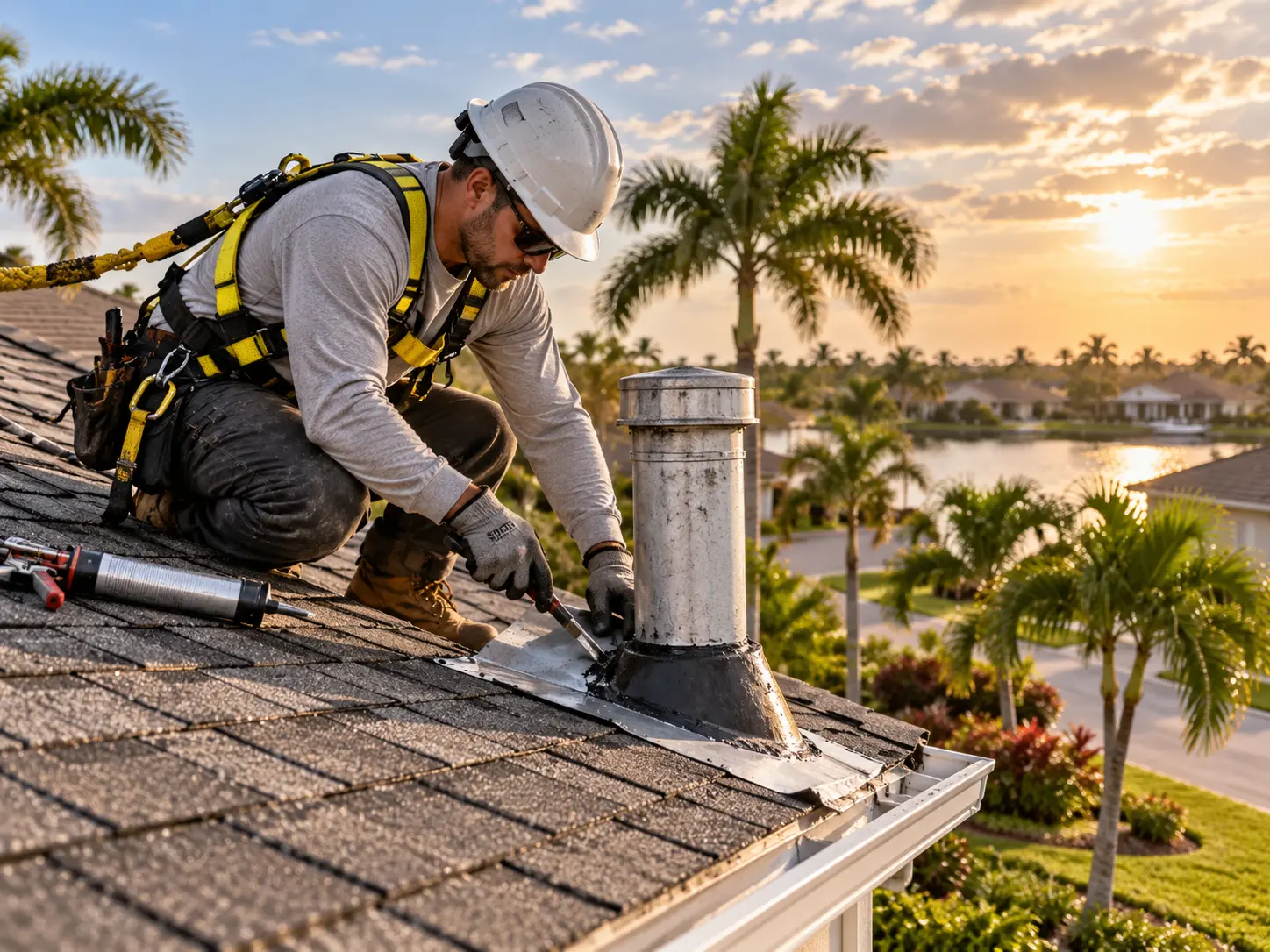
Every hole in a roof is a potential leak, and a typical Palm Bay home has quite a few: plumbing vent stacks, bathroom and kitchen exhaust outlets, attic ventilation, and sometimes a solar or electrical penetration. Each one is sealed by a component with a shorter service life than the roof covering around it.
Pipe boots in particular are one of the most common single-point leak sources in Florida. The flexible collar that grips the pipe is a rubber or synthetic component sitting in direct sun for years. It hardens, splits at the top, and opens a direct channel into the attic — usually with no visible change from the ground.
What you may notice
Signs of this problem on a Palm Bay roof
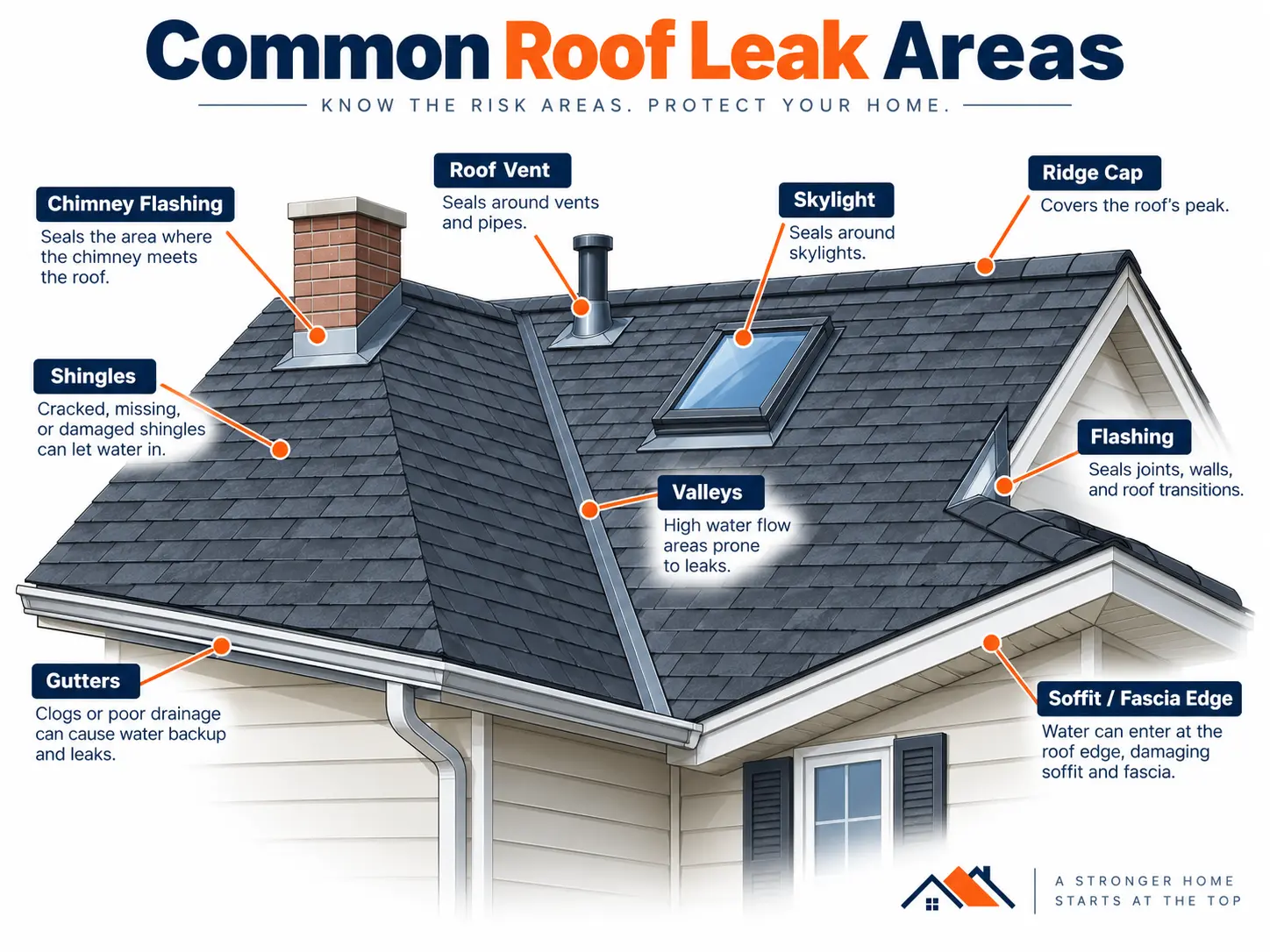
A ceiling stain near a bathroom or kitchen
Plumbing vents usually exit above the fixtures they serve, so a stain in those areas is worth checking against the roof penetrations.
Cracked or split rubber collar
The classic pipe boot failure: a split running down from the top of the collar where it grips the pipe.
Boot pulled away from the pipe
A collar that has stretched or slipped down leaves a gap around the stack.
Loose or rattling vent covers
Turbine and box vents that move in wind have loose fasteners and often compromised flashing beneath them.
Staining on attic framing below a vent
Dark streaks directly under a penetration are conclusive evidence of where water is entering.
Ridge vent lifting at the ends
Ridge vent sections that have lifted or separated allow driven rain into the attic along the peak.
Why it happens
Common causes
UV degradation of boot material
Sun exposure hardens rubber until it loses elasticity and cracks. This is the dominant failure mode in Florida.
Thermal cycling of the vent stack
The pipe moves relative to the roof as it heats and cools, working the collar loose over time.
Fastener backout
Screws and nails securing vent flanges gradually loosen, letting the flange lift and water get beneath it.
Improper flange integration
A vent flange must be shingled over on the upslope side and exposed on the downslope side. Reversing that traps water.
Wind damage to vent hoods
Turbines, caps and ridge vent sections can be displaced by strong gusts, exposing the opening beneath.
How the repair is approached
Every penetration on the roof is inspected, not only the one nearest the interior stain, because a home usually has several boots of the same age and they tend to fail in sequence.
Failed boots are replaced, not sealed. Depending on the situation that may mean a full boot replacement with the surrounding shingles lifted and reinstalled, or a collar-style repair sleeve where the flange itself is still sound and correctly integrated.
Vent flanges are re-integrated properly into the covering, with the upslope edge under the course above and the downslope edge over the course below, and fastened outside the water path.
Attic-side ventilation is considered as part of the work. Vents exist for a reason, and blocking or removing them to stop a leak trades one problem for a moisture problem inside the attic.
What matters specifically in Palm Bay
Boot life in Palm Bay is meaningfully shorter than the manufacturer's optimistic figure, because roof-surface temperatures and UV intensity here are at the harsh end of the range. Many homes need boots addressed well before the shingles are due for replacement.
Attic ventilation matters in this climate for reasons beyond leaks. Poorly ventilated attics trap heat and humidity, which shortens shingle life from below and can create condensation that gets mistaken for a roof leak.
During tropical systems, driven rain can enter through ventilation openings that work perfectly in ordinary weather. Ridge vents and turbines should be checked after any significant wind event.
Repair or replacement?
Boot and vent repairs are self-contained and almost always worth doing on their own merits. They are inexpensive relative to the damage they prevent.
If several boots on a roof are the same age and one has failed, replacing them as a group during one visit is usually more economical than paying for repeated mobilizations as each one goes.
Roof replacement is only implicated if the surrounding covering is too brittle to lift without breaking, which is itself a useful signal about the roof's overall condition.
What affects the cost
Roof repair pricing depends on inspection findings. These are the variables that move it most.
Number of penetrations
Doing several boots in one visit costs far less per unit than one at a time.
Boot type and size
Standard plumbing stacks are inexpensive; larger or specialty penetrations require different components.
Covering type
Replacing a boot on tile or metal takes more work than on asphalt shingle.
Surrounding shingle condition
If shingles crack when lifted, additional replacement material and labor are involved.
Decking damage below
A boot that has leaked for a long time may have softened the sheathing around the penetration.
Step by step
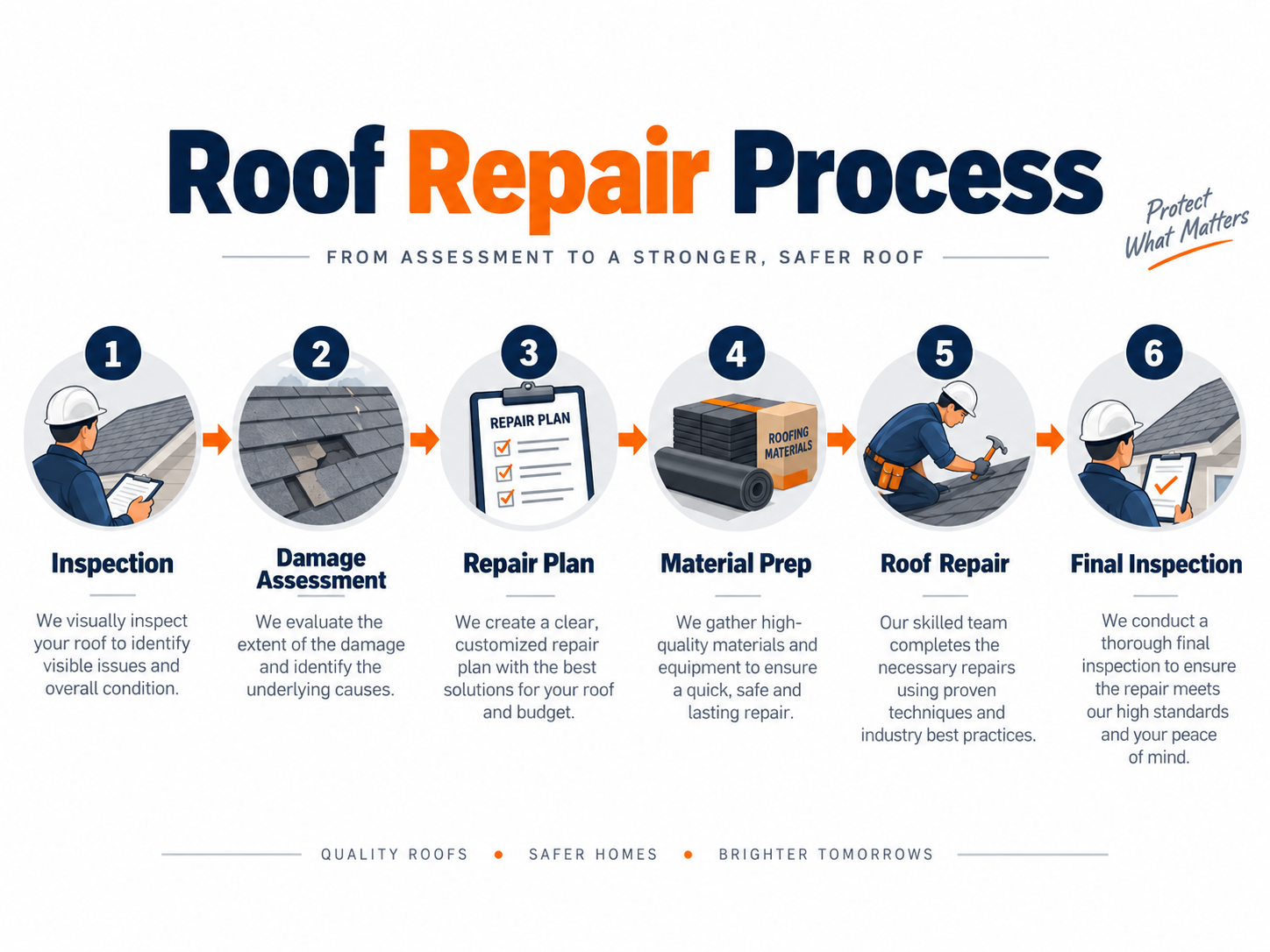
- 1Inspect every roof penetration and vent on the home
- 2Confirm which one corresponds to the interior evidence
- 3Check attic framing and decking below the penetration
- 4Replace failed boots and re-integrate vent flanges
- 5Re-install covering correctly over the flange
- 6Verify remaining penetrations and note upcoming failures
Roof Vent & Pipe Boot Repair questions Palm Bay homeowners ask
How long do pipe boots last on a Florida roof?
Shorter than most homeowners expect. The rubber or synthetic collar is exposed to direct sun on a surface that gets extremely hot, and UV steadily destroys its elasticity. Many boots in this climate begin cracking somewhere in the range of eight to fifteen years, well before an asphalt shingle roof is due for replacement. Because boots on a home are usually installed at the same time, when one fails the others are typically close behind, which is why inspecting all of them at once is worthwhile.
Can a cracked pipe boot be sealed instead of replaced?
Sealant on a cracked boot is a stopgap, not a fix. The collar cracks because the material has lost its flexibility, and applying caulk to a surface that continues to move and degrade buys months at best. There are legitimate repair options short of full boot replacement — a metal or synthetic collar sleeve that fits over the existing flange, for instance — when the flange itself is properly installed and sound. What should be avoided is a smear of mastic presented as a permanent repair.
Should I remove a leaking attic vent instead of repairing it?
No. Attic ventilation is doing real work in this climate: moving hot, humid air out of the attic, which reduces heat load on the house and helps prevent moisture accumulating on the underside of the decking. Removing a vent to stop a leak trades a visible problem for an invisible one that shows up later as damp sheathing, degraded insulation performance and shortened shingle life. The correct approach is to repair or replace the vent and its flashing so it works as intended.
Why is water coming in at my ridge vent?
Ridge vents are designed with baffles that block ordinary wind-driven rain, but they have limits. Sustained tropical wind can overwhelm them, especially if the vent is an older design, if the end caps have separated, or if fasteners have loosened and the section has lifted. Debris packed into the vent can also defeat the baffle. The repair depends on the cause: re-fastening and sealing end terminations, clearing obstructions, or replacing a section with a vent designed for higher wind exposure.
Is a leaking vent an emergency?
Usually not an emergency, but it should not wait long either. A cracked boot typically lets in a modest amount of water per storm, which is why it often produces a slowly growing ceiling stain rather than a dramatic drip. The problem is cumulative: that water lands on decking and insulation repeatedly, and in a humid climate the material rarely dries fully between storms. Handled within weeks it is a minor repair. Left through a full rainy season it can involve sheathing and drywall as well.
Related roof repair services
Palm Bay areas covered
Get a roof repair estimate for your Palm Bay home
Describe what the roof is doing and the request can be connected with local roofing service providers who handle inspections and repairs.
Roof repair requests accepted 24/7.