
Palm Bay, Florida
Shingle Roof Repair in Palm Bay, FL
Replacing missing, lifted, cracked or wind-damaged asphalt shingles and restoring the sealed courses around them.
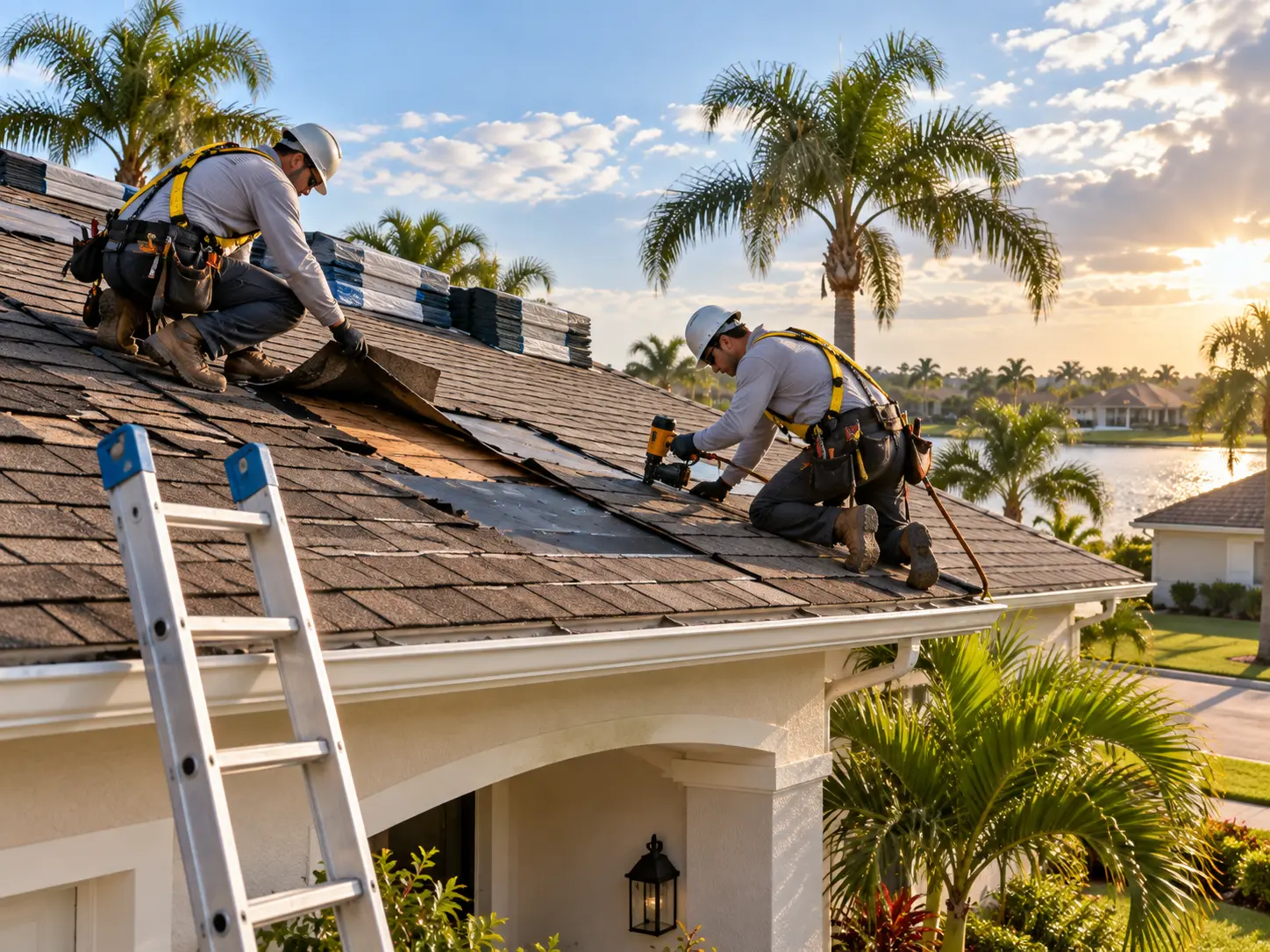
Asphalt shingles cover the majority of homes in Palm Bay, and most shingle repairs come down to the same underlying issue: the seal between courses has failed somewhere. Shingles are not simply nailed on — each course bonds to the one below through a heat-activated adhesive strip. When that bond breaks, the shingle can still look perfectly normal while behaving like a loose flap in the wind.
Shingle repair work ranges from replacing a handful of tabs after a storm to rebuilding a ridge line or a full valley run. Done properly, it blends into the surrounding roof and restores the water-shedding behavior of the courses. Done badly — face-nailed shingles, mismatched exposure, sealant used in place of correct overlap — it creates new leak points.
What you may notice
Signs of this problem on a Palm Bay roof
Shingle tabs visible in the yard
Finding shingle pieces on the ground after a storm means the roof has lost covering somewhere, even if you cannot see the spot from the street.
Lifted or curling edges
Corners that stand up instead of lying flat indicate broken seals or aged, shrinking shingles that no longer hold their shape.
Bare or dark patches
Areas that look darker or shinier than the rest of the roof are usually where granules have washed off, exposing the asphalt mat underneath.
Granules in gutters and downspouts
Some granule loss is normal, but heavy accumulation of sand-like material at downspout outlets suggests accelerated surface wear.
Cracked or split shingles
Straight-line cracks across a shingle typically come from thermal cycling and aging rather than impact, and they let water reach the underlayment.
Exposed nail heads
Nails that have backed out or were installed too high sit exposed to weather and eventually rust, creating small direct entry points.
Why it happens
Common causes
Wind uplift
Gusts get under the leading edge of a shingle course, break the adhesive bond, and progressively work the tab loose over subsequent storms.
UV and heat aging
Florida sun drives out the volatile oils in the asphalt mat over time, leaving shingles stiffer, more brittle and more likely to crack.
Improper original nailing
Nails placed above the nail line, overdriven, or underdriven fail to hold the shingle correctly and are a common cause of premature loss.
Foot traffic
Walking a hot roof, especially an older one, can fracture shingles and dislodge granules in ways that show up as leaks months later.
Debris abrasion
Branches rubbing against the surface in wind scrub granules away and can tear the mat outright.
How the repair is approached
The damaged area is opened up carefully. Shingles are sealed to each other, so removing one tab means breaking the bond above it without damaging the courses that will stay. Doing this cleanly is most of the skill in shingle repair.
Underlayment beneath the removed shingles is inspected. If it is torn, brittle or has been exposed to weather, that section is replaced before new shingles go down, because the underlayment is the barrier that protects the decking during any future failure.
New shingles are installed with correct nail placement in the nailing zone, correct exposure to match surrounding courses, and correct overlap. In cooler months the new tabs may be hand-sealed, since the adhesive strip relies on heat to activate.
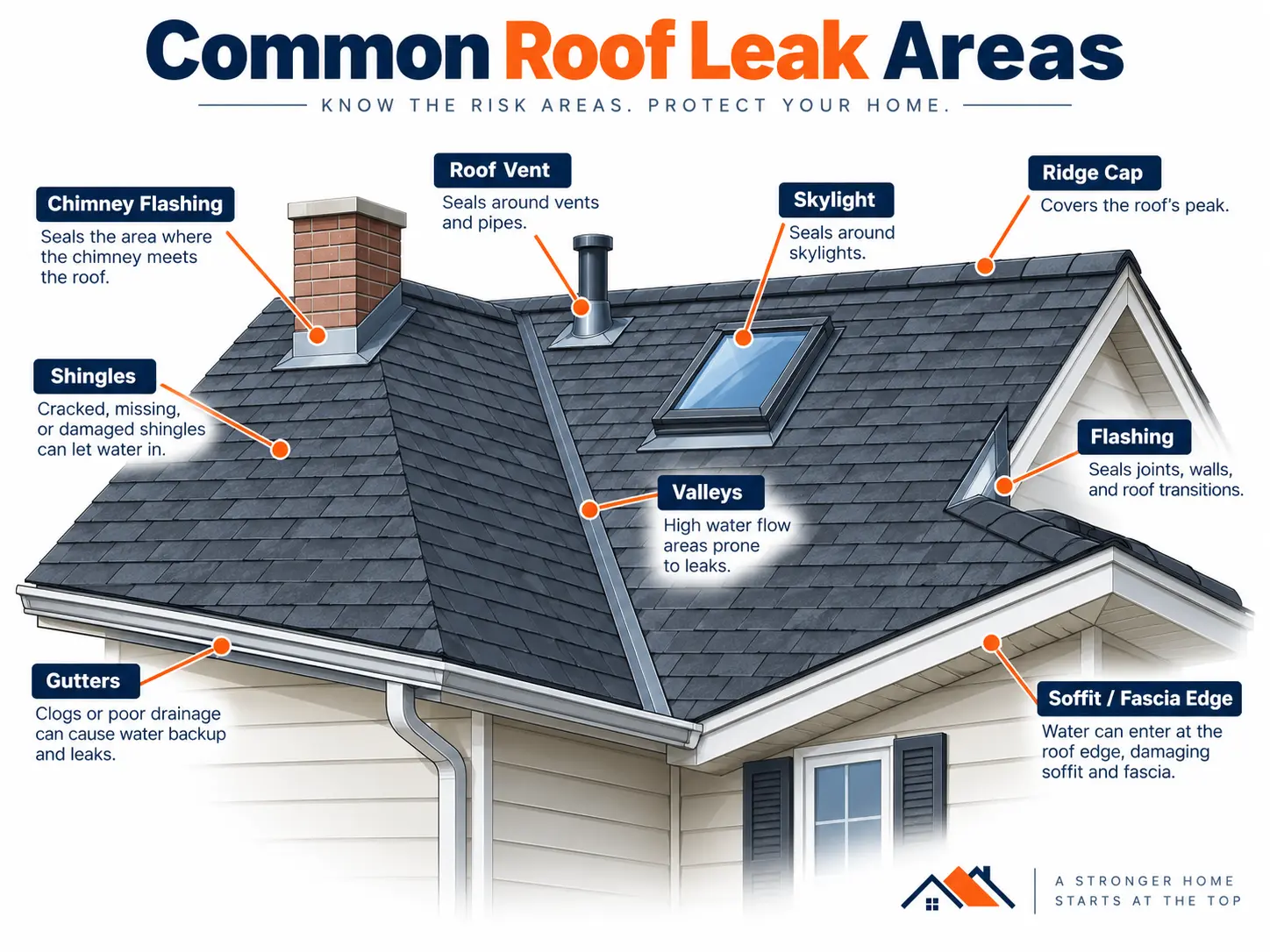
Ridge caps, hip lines and valleys receive their own treatment. Ridge caps are individual pieces that take direct wind exposure; valleys need shingles trimmed and fastened away from the centerline so runoff is not driven under a nail head.
What matters specifically in Palm Bay
Shingle roofs in Palm Bay age faster than the same product would in a mild northern climate. High UV, long hot seasons, and repeated thermal cycling all accelerate the loss of flexibility that keeps shingles sealed and intact.
Salt-influenced air near the eastern side of the city and the Indian River corridor is harder on exposed metal fasteners and drip edge than inland conditions.
Wind exposure is the other major factor. Homes on open lots, at the edge of a subdivision, or facing a lake or retention area take stronger gusts than houses shielded by neighboring structures, and the windward slope typically shows damage first.
Repair or replacement?
Repair works well when the surrounding shingles are still flexible enough to lift without cracking, the color can be reasonably matched, and the damage is limited to one area or slope.
Replacement becomes the more sensible option when shingles crack simply from being lifted, when granule loss is widespread across the roof, or when repairs have already been made in several separate locations over the past few years.
Matching is a practical consideration as well. Discontinued colors mean a repair can be watertight and still visible from the street, which some homeowners accept and others do not.
What affects the cost
Roof repair pricing depends on inspection findings. These are the variables that move it most.
Number of shingles involved
A few tabs is a small job; a slope-wide repair is a different scope entirely.
Roof pitch and height
Steeper and taller roofs require more setup, fall protection and time per square foot.
Underlayment condition
If the underlayment must be replaced along with the shingles, both material and labor increase.
Ridge and valley work
Ridge caps and valleys are more labor-intensive per foot than repairs in the open field of the roof.
Color and profile matching
Sourcing a close match for an older shingle sometimes means extra effort or ordering.
Step by step
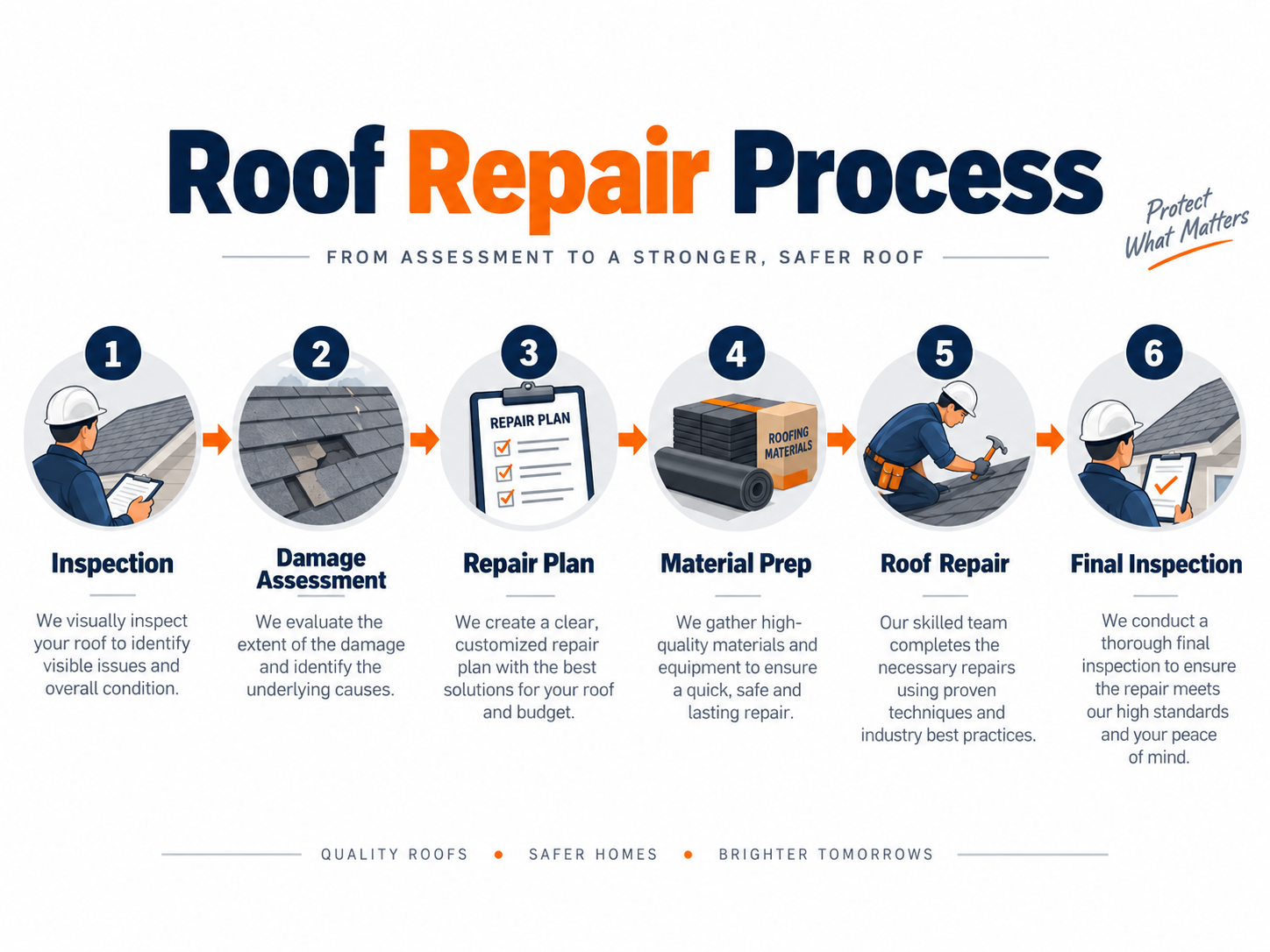
- 1Inspection of the affected slope and surrounding courses
- 2Careful removal of damaged shingles without disturbing sound ones
- 3Underlayment and decking check
- 4Installation of replacement shingles with correct nailing and exposure
- 5Hand-sealing where temperatures require it
- 6Cleanup, magnet sweep for nails, and final walk of the area
Shingle Roof Repair questions Palm Bay homeowners ask
Can you match my existing shingle color?
Often yes, and sometimes only approximately. Shingle manufacturers change color blends and discontinue lines, and every roof also weathers — a ten-year-old roof has faded from its original shade. A roofing professional will typically look for the closest available match in the same profile and weight. On a repair tucked into one slope, a slight difference usually blends visually within a season. On a highly visible front elevation, it is worth discussing expectations before the work starts rather than after.
Are missing shingles urgent if I do not see a leak?
Yes, more than most people expect. What is exposed underneath is underlayment, and underlayment is designed as a secondary barrier — a backup for short periods, not a roof covering. Under Florida sun and rain it degrades quickly once exposed. The area is also a starting point for further wind damage, because the adjacent shingles have lost the edge protection they relied on. Repairing promptly is nearly always cheaper than repairing after the underlayment fails and water reaches the decking.
Why do shingles blow off when the wind was not that strong?
Because the seal was already broken. Once the adhesive bond between courses fails — from age, from a previous storm, or from improper installation — the shingle behaves like a loose flap and a moderate gust is enough to take it. This is why roofs sometimes lose shingles in a routine afternoon thunderstorm after surviving a much stronger event. It is also why a post-storm inspection matters: seal damage is invisible from the ground but sets up the next failure.
Can nail pops be repaired without replacing shingles?
Sometimes. A nail that has worked its way up under a shingle can occasionally be reseated and sealed with the shingle put back in place. More often the shingle around it has been lifted or deformed and is better replaced. What matters is not leaving an exposed nail head sealed only with caulk, because caulk shrinks and cracks in this climate. The right fix restores a shingle over the fastener so water is shed rather than relying on sealant as the barrier.
How long should a shingle repair last?
A correctly executed repair on a roof with sound surrounding material should last as long as the rest of the roof does. That is the important qualifier. If the roof is nearing the end of its service life, the repaired section may well outlast the shingles around it, and additional problems can appear elsewhere. A repair fixes the area it covers; it does not extend the life of the whole roof. Understanding which situation you are in is what an inspection is for.
Get a roof repair estimate for your Palm Bay home
Describe what the roof is doing and the request can be connected with local roofing service providers who handle inspections and repairs.
Roof repair requests accepted 24/7.